Why Men Need Massages Too
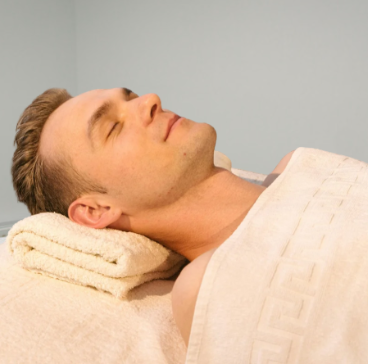
For years, wellness was marketed to women while men got sold optimization. Women bought yoga classes. Men bought Whoop bands.
Then something shifted.
Today, the same men tracking HRV, sleep scores, and Zone 2 cardio are increasingly treating massage less like a luxury and more like maintenance.
The Maintenance Premium: Why Smart Men Don’t Wait for an Injury to Book a Massage
In certain corners of the wellness industry, massage therapy is still marketed as an occasional indulgence—a soft-focused, cucumber-water-scented escape reserved for "self-care Sundays." For the modern New York professional, athlete, or founder, that narrative isn't just outdated; it’s bad biology.
The male frame—whether navigating an intense weight-training cycle, logging miles on the West Side Highway, or enduring a grueling 70-hour desk-bound sprint—is subject to distinct mechanical and neurological stressors. Yet, a stubborn cultural holdover often causes men to view bodywork as a reactive measure: something you seek out only after a muscle tears, a lower back slips, or chronic insomnia becomes unmanageable.
Smart high-performers are shifting away from reactive treatment toward proactive physical calibration. Taking care of your musculoskeletal system isn't about pampering; it’s about asset protection. You wouldn't drive a precision-engineered vehicle for 50,000 miles without checking the alignment or changing the oil. Your body requires the exact same structural maintenance.
The Anatomy of the Desk Bound Frame
Whether you are running an early-stage startup or trading on Wall Street, sitting at a desk and staring at a multi-monitor setup wreaks havoc on male biomechanics. Men frequently carry systemic tension across the superior aspect of the trapezius and at the suboccipital base of the skull—a pattern accelerated by looking down at devices.
Over time, this behavioral pattern leads to a structural anomaly known as Forward Head Posture, or "Tech Neck."
When the head shifts forward out of its natural alignment, it exponentially increases the structural load on the cervical spine. To compensate, the pectoral muscles shorten and tighten, pulling the shoulders forward, while the muscles of the mid-to-lower back are forced into a state of chronic, eccentric strain.
Clinical massage therapy systematically targets this loop. By releasing the hypertonic chest muscles, deep tissue work allows the shoulder girdle to drop back into its natural plane, relieving the strained posterior chain and restoring a confident, neutral posture.
Closing the Recovery Gap
For men who frequent the gym, lift heavy, or participate in competitive athletics, performance is heavily dictated by the "recovery gap"—the stark delta between how hard you train and how much attention you give to tissue mobility.
Muscular hypertrophy and cardiovascular endurance are built on a cycle of micro-trauma and repair. When you leave metabolic waste and micro-tears unaddressed, the body adapts by laying down disorganized collagen fibers, commonly known as scar tissue. This significantly limits your range of motion.
Biomechanical Range of Motion: Tight, restricted muscles limit your lifting form. Restoring optimal tissue elasticity means deeper squats, cleaner overhead presses, and a radically reduced risk of acute muscle tears.
Metabolic Clearance: Deep, targeted strokes assist the lymphatic system in flushing out the biochemical byproducts of intense anaerobic training, dramatically shortening the duration of Delayed Onset Muscle Soreness (DOMS).
Through an ongoing collaboration with The Workout Plan, we have analyzed how integrating skilled bodywork into a standard training split accelerates tissue remodeling, allowing athletes to return to peak output faster.
The Cortisol Tax and Cardiovascular Health
The benefits of clinical bodywork extend far beyond the muscular skeleton. Men are statistically at a higher risk for cardiovascular complications, and chronic psychological stress plays a direct role in elevating resting heart rates and keeping cortisol—the primary stress hormone—perpetually spiked.
Furthermore, conventional conditioning often encourages men to internalize mental pressure. This suppressed stress rarely stays quiet; it manifests physically as visceral tension held in the jaw (TMJ dysfunction), the pelvic floor, and the deep hip flexors.
During a focused clinical massage, specific, sustained pressure stimulates mechanoreceptors in the fascia. This triggers an immediate neurological shift, down-regulating the sympathetic nervous system (fight-or-flight) and activating the parasympathetic nervous system (rest-and-digest). The brain lowers its guard, blood pressure stabilizes, and the systemic production of serotonin—the neurotransmitter essential for deep sleep architectures and mood stabilization—is naturally up-regulated.
Precision Execution
Integrating bodywork into a highly scheduled lifestyle requires strategy, not spontaneity.
The Maintenance Schedule: Treat clinical massage like any other high-level appointment. A bi-weekly or monthly 75-minute session is typically the sweet spot for maintaining tissue elasticity and keeping systemic inflammation at bay.
Communicate Biomechanics: When you step into a session, skip the vague "just relax" instructions. Tell your clinician exactly how your body moves. Detail your desk setup, your lifting split, and where your mobility feels blocked.
At PRESS Modern Massage, our studios are designed for individuals who value expertise over superficial fluff. Our licensed clinicians don't deliver generic, cookie-cutter strokes; they assess your structural baseline and design a targeted treatment plan to undo the precise stress your body has been holding.
You don't need to move out of the city or change your career path to feel human again. You simply need to give your physical frame the precise calibration it requires to keep performing at its absolute highest level.
FAQ
Is deep tissue massage supposed to be painful to be effective? No. The "no pain, no gain" ethos is a counterproductive myth when applied to bodywork. While deep tissue massage requires firm, deliberate pressure to access deeper muscular layers and fascial planes, it should never cross the threshold into sharp, hyper-acute pain. If a stroke is too intense, your nervous system will reflexively brace and contract the muscle to protect it, defeating the entire purpose of the treatment. Open communication with your PRESS clinician ensures the pressure stays therapeutic, not traumatic.
How does massage improve sleep architecture if it’s done during the day? The neurological shift triggered by a clinical massage doesn't end when you leave the table. By lowering systemic cortisol and stimulating the vagus nerve during your session, bodywork sets off a biochemical chain reaction that balances your autonomic nervous system. When evening arrives, your body can transition into deep, slow-wave sleep cycles more efficiently, improving overall sleep latency and quality.
What should I do immediately following a clinical massage to maximize recovery? Hydrate adequately to support the metabolic clearance initiated during the session. Avoid scheduling a high-intensity, maximal-effort workout immediately after deep bodywork; your muscles have just been thoroughly lengthened and relaxed, meaning your neurological firing patterns and joint stability are temporarily altered. Allow your body a 12-to-24-hour window of light activity or rest to integrate the structural changes.