
Chair Massage for Events That People Want
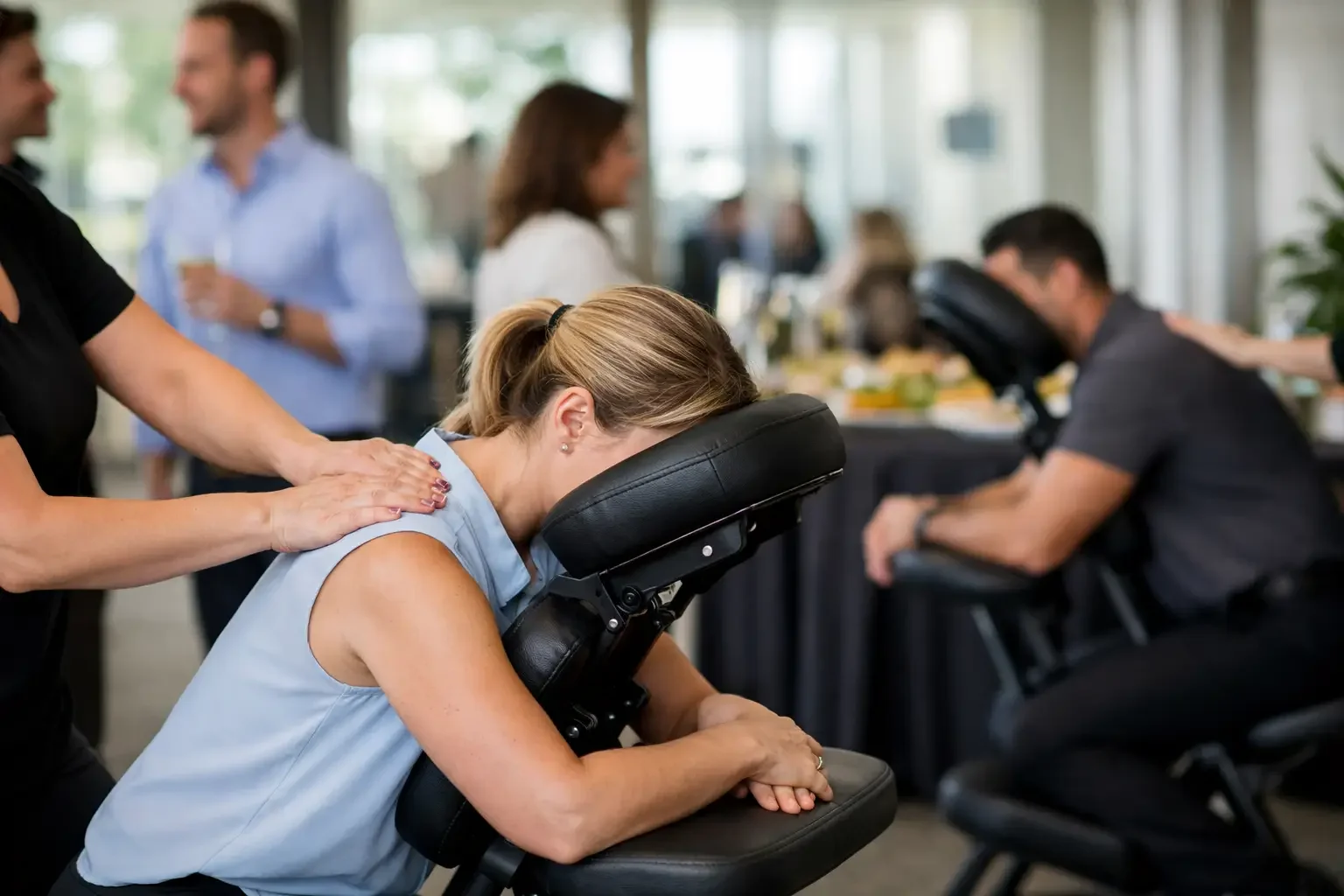
There is a specific kind of event fatigue that hits around minute 47. The panel has gone long. Everyone is pretending to listen while quietly checking Slack. Coffee has stopped helping. And then, off to the side, someone sits in a massage chair for ten minutes and comes back looking like they remembered they have a spine.
That is the real appeal of chair massage for events. Not luxury. Not gimmick. Relief, right when attention, posture, and patience are falling apart.
In New York, where people sprint to breakfast meetings, stand through conferences, commute with one shoulder permanently raised, and somehow treat jaw clenching as a personality trait, event wellness only works when it solves an immediate physical problem. Done well, chair massage does exactly that. Done badly, it becomes one more branded activation no one asked for.
Why chair massage for events works
A lot of event perks are nice in theory and forgettable in practice. Branded tote bag. Mini pastry. Photo booth no one will revisit. Chair massage is different because the value is felt instantly.
Most adults carry a predictable cluster of tension - neck, shoulders, upper back, forearms, sometimes low back. If they work at a desk, travel often, parent young children, train hard, or spend six hours a day on a laptop and two more on a phone, that tension tends to pile up fast. A short chair session cannot fix every postural issue or pain pattern, but it can reduce guarding, improve comfort, and help someone feel more physically present in the room.
There is also a behavioral reason it works. When people feel better in their bodies, they engage differently. They linger. They talk. They stop scanning for the exit. Research on massage suggests short sessions can reduce perceived stress and improve mood in the near term, though the exact effects vary by person and setting. That matters at events, where energy is fragile and attention is expensive.
What chair massage is actually good for at an event
The strongest case for chair massage for events is not that it turns a conference into a wellness retreat. It is that it targets the exact kinds of tension modern events create.
Conferences and corporate offsites
If your attendees have been sitting, networking, typing, carrying tote bags, and pretending not to be tired, chair massage can help with upper-back tightness, neck stiffness, and stress overload. It fits naturally into longer agendas where physical discomfort starts dragging down focus.
Brand activations and client events
Here the trade-off is between spectacle and usefulness. Chair massage tends to perform better when the brand wants to be associated with care, quality, or performance rather than novelty alone. A thoughtful setup says, we know how your body feels after a long week, and we planned for that.
Wellness days and employee appreciation events
This is the most obvious fit, but also the easiest to get wrong. If the massage station feels like a token gesture in a culture that otherwise burns people out, attendees notice. If it is part of a broader effort to reduce friction and support actual well-being, people notice that too.
Weddings, family gatherings, and private events
Less common, but often surprisingly popular. Anyone who has planned a wedding knows the body cost - hours on your feet, logistics stress, little sleep. Short sessions can help guests, wedding parties, or hosts reset without disappearing for an hour.
What makes event massage feel useful instead of awkward
This is where many organizers miss the point. The massage itself may be good, but the experience around it can still feel off.
First, placement matters. Put the chairs in a chaotic traffic lane next to a speaker system and you have created a stress experiment, not a relief station. The best setup is visible enough to attract interest but buffered enough to let people relax for ten minutes without feeling like they are performing relaxation in public.
Second, timing matters. Too short, and people barely settle in before the session ends. Too long, and the line becomes its own source of agitation. For most event formats, 10 to 15 minutes is the sweet spot. That is enough time to work the neck, shoulders, back, arms, and hands with real intent.
Third, the therapist matters more than the chair. Skilled licensed therapists know how to assess quickly, adjust pressure, work around injuries, and focus on the areas that are actually driving discomfort. That is especially relevant at events, where people arrive with old shoulder issues, marathon-training calves, pregnancy considerations, or a low-grade tech-neck problem they have been ignoring since 2021.
This is one reason a therapeutic practice like PRESS Modern Massage makes sense in the event context. The difference is not just polish. It is judgment.
The best event massage is specific
Generic relaxation language tends to flatten what chair massage can actually do. A better approach is to think in symptoms and use cases.
The startup founder at a product launch may need upper-trap and forearm work after a week of laptop hunching. The finance team at an offsite may all have some version of neck tension plus low back irritation from commuting and sitting. The fashion publicist on her feet all day may want shoulders and calves. The new parent at a community event may just want someone to make the area between shoulder blades feel human again.
This is where event planning gets more intelligent. Instead of treating massage as decor, you treat it as targeted physical support inside a crowded schedule.
Common concerns about chair massage for events
Some organizers worry it will look indulgent. In 2026, that concern feels dated. If anything, people are more skeptical of empty luxury signaling than they are of practical recovery tools. The modern audience, especially in New York, understands body maintenance. They book physical therapy, track sleep, stretch between meetings, wear compression boots, and complain about hip flexors over salad.
A more reasonable concern is logistics. Will it slow traffic flow? Create long waits? Distract from programming? It depends on the event design. A single chair at a 300-person conference may create frustration. Multiple therapists, clear sign-up flow, and realistic expectations solve most of that.
There is also the question of whether chair massage is worth it if sessions are short. Usually, yes - if expectations are right. Ten minutes is enough to produce noticeable relief. It is not enough to treat chronic pain comprehensively, and no honest provider should imply otherwise. But short-format bodywork can absolutely shift how someone feels for the rest of the event.
How to plan chair massage for events well
Start with the reason, not the perk. Are you trying to keep attendees energized through a full-day program? Offer a useful hospitality feature at a client event? Add substance to a wellness initiative? The answer should shape scheduling, staffing, and setup.
Then think like a New Yorker with a full calendar. Friction kills participation. If guests need to scan three QR codes, download something, and wait 40 minutes, interest will collapse. Keep booking simple. Keep the location obvious. Keep the sessions on time.
It also helps to brief therapists on the audience. Office workers and conference attendees tend to need concentrated upper-body work. Fitness events may call for more attention to lower body recovery. Mixed crowds require adaptability. The more precise the approach, the more memorable the service.
And please, do not blast aromatherapy into the room and call it wellness. Many people want relief, not ambiance. Quiet competence goes further.
Where chair massage fits in a culture that is finally admitting people hurt
One reason chair massage is gaining traction at events is that the old split between performance and recovery has started to look absurd. People are expected to show up sharp, social, articulate, and camera-ready while managing chronic tension, poor ergonomics, bad sleep, packed commutes, and a level of screen time no spine signed off on.
So yes, chair massage at an event can be a nice amenity. But it is also a small correction to a larger problem: we keep building experiences for brains and calendars, and then act surprised when bodies revolt.
The smartest event planning now accounts for the physical experience of attendance. Are people standing too long? Sitting too long? Carrying too much? Talking over noise? Looking down at phones? Chair massage does not solve every one of those issues, but it acknowledges that the body is part of the guest experience, not an inconvenient side character.
That is why it works best when it is not treated as fluff. It is practical. It is efficient. And in the right hands, it can be the one part of an event people talk about on the way home - not because it was flashy, but because for ten minutes, something actually felt better.
If you are going to ask people for their time and attention, it is not a bad idea to give their neck and shoulders a little consideration too.
One More Thing
Every PRESS session starts with what your body actually needs that day. Our licensed massage therapists work from anatomy, your feedback, and honest evidence, at our studios in Williamsburg, Brooklyn, Greenpoint, Brooklyn, Union Square, Manhattan, Columbus Circle, Manhattan, and Long Island City, Queens. Book here.
