
How Therapeutic Massage Helps Posture at Work
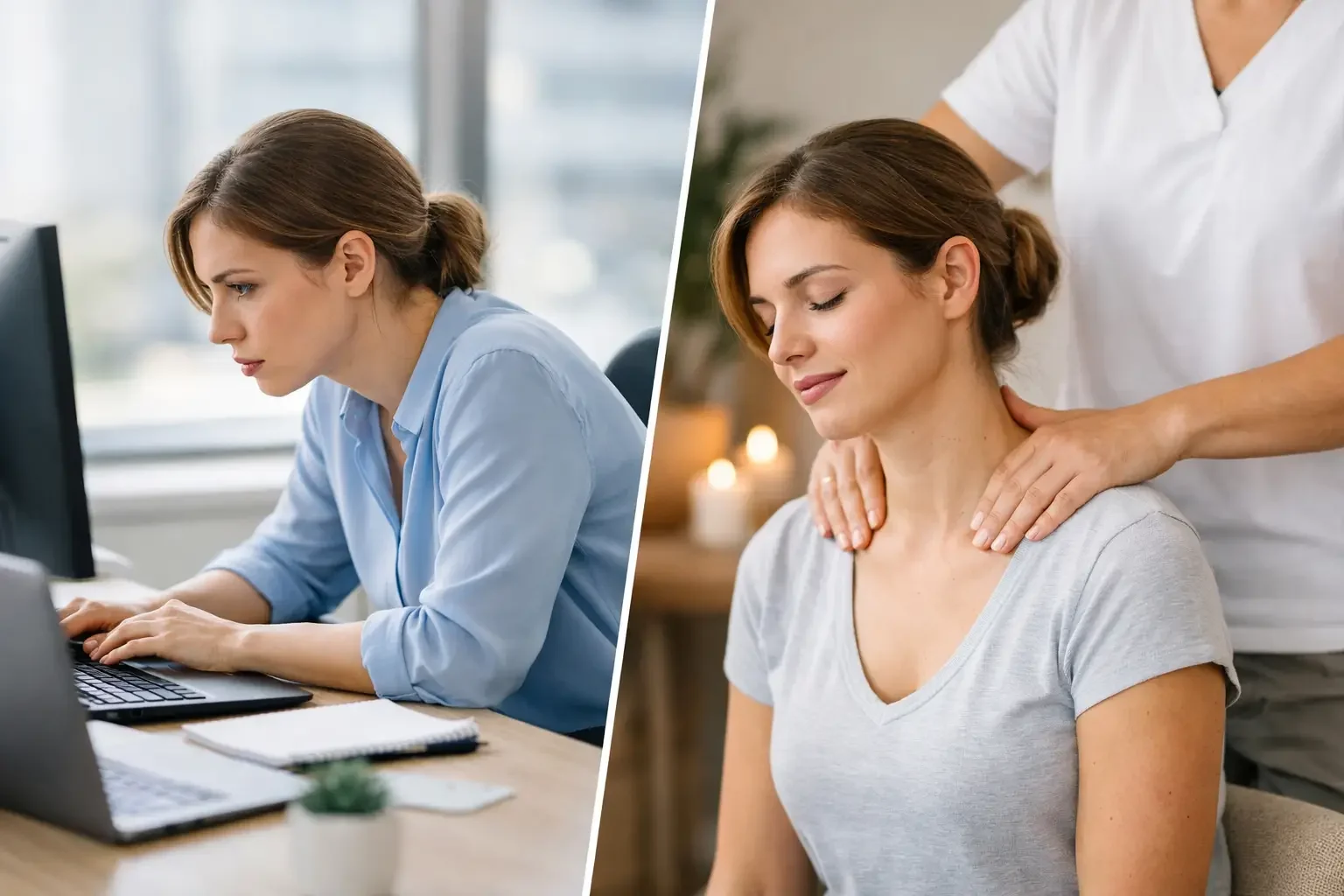
Your posture is probably not being ruined by one bad office chair. It is being negotiated all day: hunched over a laptop on the L train, leaning into a second monitor, carrying a toddler up four flights, then trying to make a 6:30 strength class with the same tight hips and stiff upper back.
That is where our blog, “how therapeutic massage helps posture”, becomes more interesting than the usual command to “sit up straight.” Good posture is less a frozen, shoulders-back pose than your body’s ability to move, shift, and hold itself comfortably through whatever a New York day requires. Therapeutic massage cannot replace strength, ergonomics, or medical care when needed. It can, however, change the muscular conditions that make better posture feel possible rather than performative.
Posture is a capacity, not a pose
The idealized posture diagram from health class did real people few favors. Nobody maintains a perfectly stacked spine for eight hours, and trying to do so can create a fresh set of tension patterns. Bodies are designed to vary position. The trouble starts when one position becomes the default - especially the slightly collapsed, forward-reaching shape demanded by screens, commutes, and apartment desks that were never meant to host a full workday.
When you spend hours with your head forward and arms in front of you, muscles around the chest, neck, shoulders, and upper back must work differently. Some become overactive and guarded. Others may not be doing enough of their share. You might notice that your shoulders round, your neck feels compressed by 3 p.m., or your low back starts objecting during a standing meeting.
Massage does not “put bones back where they belong.” That claim is too neat, and the body is more complicated than that. Its useful role is to address sensitivity, muscle tension, and limited comfort with movement. When a tight area is less protective and painful, you have more options: reaching overhead, turning your head, sitting tall without bracing, or taking a full stride instead of moving around an ache.
How therapeutic massage helps posture: less guarding, more choice
A licensed therapist starts with what your body is actually doing, not with a generic sequence meant to make everyone feel vaguely spa-like. If your shoulders live near your ears after a week of investor decks or end-of-quarter reporting, the focus might include the upper trapezius, levator scapulae, chest, and muscles around the shoulder blades. If your low back is doing too much because your hips feel restricted, the work may include the glutes, hip flexors, and surrounding tissues.
The goal is not to declare one muscle “bad” and another “asleep.” Those labels are popular online but often oversimplify. The practical question is whether a particular pattern is leaving you sore, restricted, or unable to move well.
Massage can help in several connected ways. It may reduce the feeling of tightness and pain that encourages guarding. It can improve short-term range of motion, particularly when stiffness has made normal movement feel like a negotiation. And it gives the nervous system a clear sensory input: this area can be touched, moved, and used without immediately sounding the alarm.
Research on massage for pain and mobility is encouraging but not magic. Outcomes vary by the person, the condition, and the type of massage provided. The strongest case is usually not that massage permanently changes posture after one appointment. It is that it can reduce symptoms and make movement-based habits easier to practice consistently.
The neck-and-shoulder problem is rarely just the neck
Your neck is often the messenger, not the entire problem. A laptop pulls the eyes down. A phone brings the head forward. Stress adds shallow breathing and clenched jaw muscles. Then there is the classic New York accessory: a heavy tote carried on the same shoulder from SoHo to Midtown.
Therapeutic work for this pattern may include the chest, upper back, shoulders, neck, and jaw, depending on what is contributing. Someone with recurring tension headaches, for example, may benefit from attention to the neck and surrounding muscles, but frequent or severe headaches still deserve a conversation with a medical professional. Massage is a useful part of care, not a diagnosis machine.
Hips matter, especially when your chair has become an address
Remote work gave many people freedom from the commute and a new relationship with the sofa. Long periods of hip flexion can leave the front of the hips feeling stiff, while the glutes and trunk may contribute less effectively during walking, climbing stairs, or training.
Massage may make the hips, thighs, and low back feel more available. That matters when you are trying to squat, run, pick up a child, or simply stand at a kitchen counter without shifting from foot to foot. But lasting change tends to come from pairing that relief with use: walking, strength training, mobility work, or a few deliberate movement breaks between calls.
The underrated posture benefit: body awareness
Many posture problems are not a knowledge problem. Most people already know they are slumping. They just notice it 45 minutes after their shoulders began creeping upward.
A focused massage session can sharpen the feedback. You become aware that you are holding your breath while answering email, locking your knees while standing, or tightening your jaw during a difficult conversation. That awareness is not mystical. It is practical information, and it creates the small interruption where a different choice can happen.
The most useful cue is often not “pull your shoulders back.” Try letting your ribs settle, placing both feet on the floor, taking a longer exhale, or changing positions before discomfort becomes a production. The body responds better to variety than correction theater.
Why one great massage may not be enough
If a massage relieves your upper back for two days and the tension returns, that does not mean it failed. It means your environment and routines are powerful. Your body went back to the same 40-hour screen week, the same subway time, the same sleep-deprived parenting shift, or the same marathon-training mileage.
For persistent patterns, regular care can be more useful than an occasional emergency appointment. This is the logic behind treating massage as maintenance: not because you need to be fixed forever, but because high-demand bodies benefit from recurring attention. At PRESS Modern Massage, therapists can tailor sessions around the specific combination many New Yorkers know well: desk tension, training fatigue, travel stiffness, and the low-grade stress of carrying too much through a crowded city.
Frequency depends on symptoms, budget, training load, and what else you are doing. A person in an acute flare may choose a short series of sessions alongside guidance from a physician or physical therapist. Someone generally healthy but screen-bound may find monthly massage, plus smarter work breaks and strength work, is enough to stay ahead of the familiar neck-and-shoulder spiral.
Build a better posture system around the massage table
Massage works best when it is not asked to compensate for every other part of your life. After a session, use the window of easier movement. Take a short walk instead of immediately folding back over your phone. Set your laptop high enough that your eyes are not permanently pointed toward your keyboard. Alternate the shoulder that carries your bag. If you train, use the improved range of motion to practice a controlled squat, row, deadlift, or overhead reach with good coaching.
There is a trade-off here. Chasing perfect posture can make you rigid and hypervigilant. Ignoring discomfort because everyone is “a little tight” can let a manageable issue become a chronic one. The better middle ground is responsiveness: notice the pattern, address the tissue, change the setup, and keep moving.
A body that can adapt is usually more useful than a body that can pose. If massage helps you turn your head on a cab ride, sit through a presentation without pain, or finish a long run without your low back taking over, that is posture improvement with a point.
One More Thing
Every PRESS session starts with what your body actually needs that day. Our licensed massage therapists work from anatomy, your feedback, and honest evidence, at our studios in Williamsburg, Brooklyn, Greenpoint, Brooklyn, Union Square, Manhattan, Columbus Circle, Manhattan, and Long Island City, Queens. Book here.
