
Creating a Self-Care Routine: Combining Massage and Psychotherapy
Some tension is muscular. You sat too long, lifted wrong, slept badly. But anyone who's worked with bodies for long enough will tell you the other truth: a lot of what we carry in our shoulders, jaws, and backs didn't start there.
That's why we partnered with Hannah Tishman Psychotherapy on this piece. Hannah runs a virtual group therapy practice in NYC, and her work sits on the other side of a connection our massage therapists see on the table every day: the mind and the body keep each other's secrets.
At PRESS Modern Massage, our licensed massage therapists work with New Yorkers every day who experience muscle tension alongside demanding jobs, busy schedules, and everyday stress. Massage isn't a substitute for mental health care, and psychotherapy isn't a substitute for physical treatment. But when appropriate, the two can play complementary roles in a broader self-care routine.
Where massage fits
Full-body massage can be one part of a routine for addressing muscular tension, soreness, and the physical effects of a demanding schedule.. A few principles our massage therapists come back to with clients building a real routine:
Consistency beats intensity. A monthly session you actually keep does more than a heroic one-off when everything already hurts. Regular bodywork keeps tension from accumulating into something chronic, which is the entire logic behind treating massage as maintenance rather than rescue.
Say where it hurts, and where it doesn't. The more specifically you communicate with your massage therapist about tension, discomfort, and pressure preferences, the more targeted the session. Clinical massage works best as a conversation, not a guessing game.
Do the in-between work. A foam roller or a massage ball between sessions won't replace skilled hands, but it keeps things moving. Ten minutes on a tight spot is a legitimate part of the routine, not a lesser version of it.
From here, we hand it to Hannah, whose perspective on the psychotherapy side is worth reading slowly.
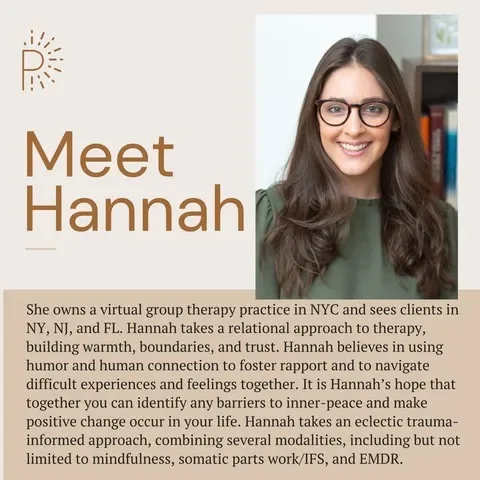
Hannah Tishman is a New York-based psychotherapist and founder of Hannah Tishman Psychotherapy, a virtual group therapy practice. Her work includes EMDR and psychotherapy for clients experiencing concerns including anxiety, stress, trauma, and chronic pain.
Hannah's perspective
Psychotherapy and massage therapy can complement each other quite effectively, as both offer a holistic approach to well-being. We often store the impacts of trauma and underlying stress in our body and they can show up as migraines, back pain, tension headaches, joint pain, achiness, and more.
Addressing both physical and emotional tension simultaneously often leads to increased relief. In my practice, my specialty is Eye Movement Desensitization and Reprocessing Therapy. This therapy is primarily used for PTSD, but can also be used for chronic pain, anxiety, stress, and other symptoms. By focusing on pain-related memories, current pain sensations, or anticipated stressful situations while engaging in bilateral stimulation (tapping or rapid eye movement), the intensity of pain can reduce both emotionally and physically.
Without giving proper attention to both the mind and the body, healing cannot take place. There is an intimate connection between both. Through therapy, individuals can increase awareness of this connection, while massage therapy can provide relaxation and physical release, leading to a more regulated nervous system.
It's important to note that those who may have PTSD might be less comfortable with massage or touch. Instead, they might be able to engage in self-massage alternatively.
Building the routine
Neither modality replaces the other, and that's the point. Therapy builds awareness of what your body is holding and why; massage gives the body a way to actually let it go. If you're constructing a self-care routine that works on both levels, the combination is stronger than either alone.
There isn't one schedule that works for everyone. The goal is consistency rather than trying to do everything at once.
Start with what you're actually experiencing. If recurring muscle tightness is the issue, talk with your massage therapist about where you feel it, what seems to trigger it, and how long it lasts. If stress, anxiety, trauma, or emotional patterns are affecting your day-to-day life, those concerns belong with a qualified mental health professional.
Choose a sustainable frequency. Some PRESS clients incorporate massage monthly, while others schedule sessions when workload, training, travel, or physical discomfort increases. Your massage therapist can help you determine what makes sense based on how your body responds.
Pay attention between appointments. Notice whether certain activities, positions, sleep habits, or stressful periods coincide with increased tension. That information can make both your massage sessions and your broader self-care routine more useful.
Don't treat either modality as a cure-all. Massage may help with muscular tension and relaxation, while psychotherapy addresses mental and emotional health. Persistent pain, neurological symptoms, injuries, or other medical concerns should be evaluated by an appropriate healthcare professional.
Ready when you are: Book a massage at any of our five studios, in Williamsburg, Greenpoint, Union Square, Columbus Circle, and Long Island City.