
Safe Pregnancy Massage in NYC: What Actually Matters
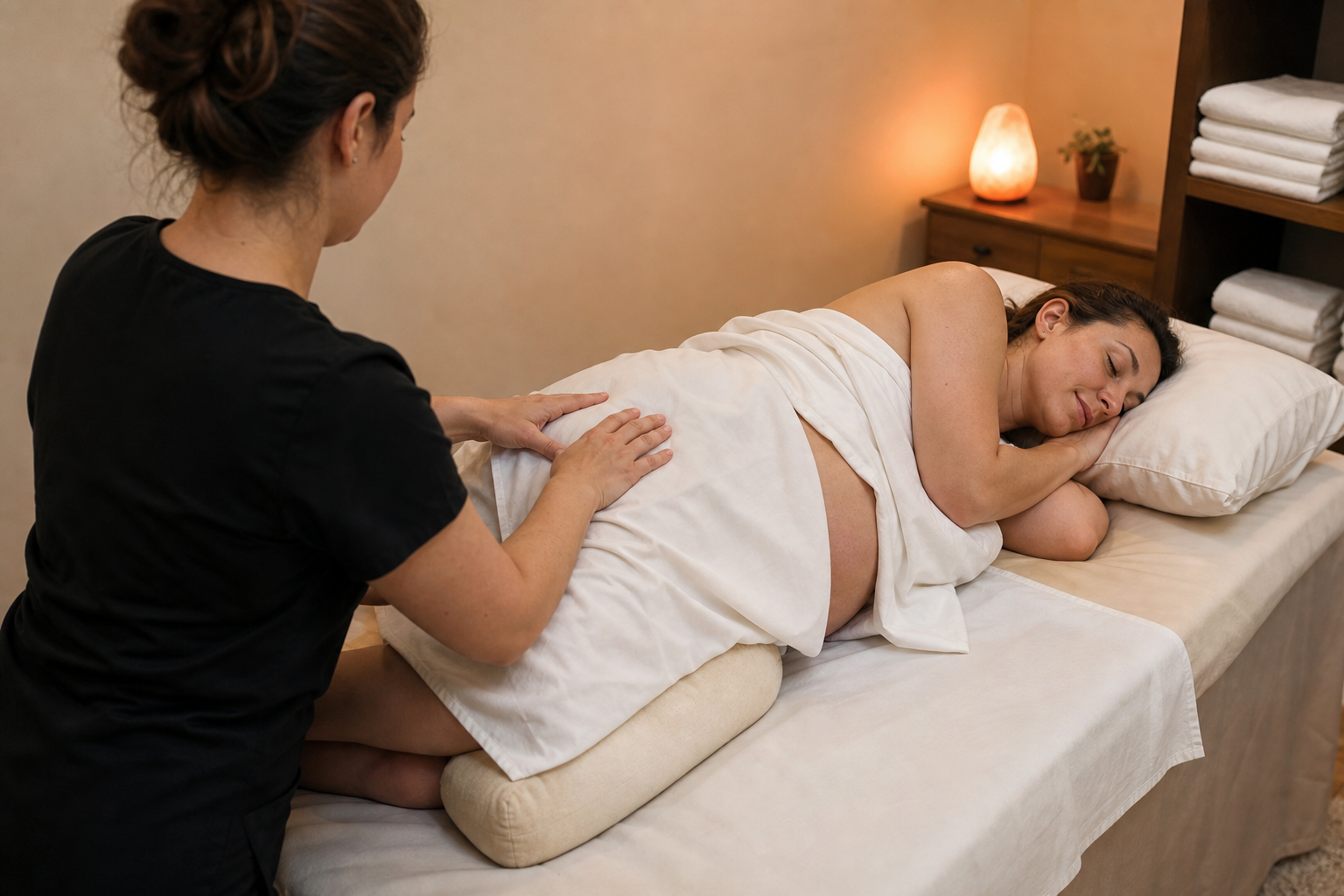
Pregnancy in New York has a particular physical vocabulary: a packed subway platform, a laptop balanced at the edge of the bed, a toddler who has decided only one person can carry them, and sleep that has become oddly strategic. Looking for safe pregnancy massage in NYC is not about chasing a candlelit escape. It is usually about getting through the week with less low-back ache, fewer tension headaches, and a body that feels a little more cooperative.
A good prenatal session can be a practical part of that equation. It should also be treated as specialized bodywork, not a standard massage with a pregnancy pillow added at the last minute. Safety comes down to screening, positioning, pressure, communication, and knowing when massage is not the right appointment for that day.
What makes pregnancy massage safe?
The first question is not, "Can you massage pregnant clients?" It is, "How do you adapt your work for this particular person, at this particular point in pregnancy?" A licensed massage therapist should ask about trimester, symptoms, pregnancy history, activity level, recent medical guidance, and what has changed since the last session. That intake is not paperwork theater. Pregnancy can be uncomplicated one week and medically eventful the next.
At PRESS, pregnancy massage is available in all trimesters, including the first. The first trimester is often treated as a blanket no-go by businesses trying to simplify a more nuanced issue. There is not strong evidence that appropriately adapted massage is harmful in early, uncomplicated pregnancy. Still, early pregnancy can bring fatigue, nausea, bleeding concerns, prior-loss anxiety, or medical complexity. A skilled licensed massage therapist makes room for that context rather than acting as though every client has the same risk profile.
Positioning is the central practical detail. Most prenatal massage is performed side-lying with bolsters to support the hips, knees, belly, and shoulders. This lets the massage therapist work on the back, glutes, hips, legs, neck, and arms without asking the body to tolerate an awkward setup. Prone positioning, face down with proper support, is also available at PRESS when it suits your stage and comfort. Plenty of pregnant clients miss lying face down more than almost anything, and with the right setup it can be both safe and genuinely relieving. It does involve some extra setup, so mention it when you book. For details on positioning, timing, and what to expect, the PRESS Pregnancy Massage page covers the practical questions.
Pressure matters, too, but not in the simplistic way people often assume. Pregnancy massage does not need to be feather-light to be safe, and deep pressure is not automatically better because someone has spent nine months developing an impressive tolerance for discomfort. Precision over force is the useful rule. A licensed massage therapist can use thoughtful pressure around stubborn upper-back tension, glute tightness, or overworked calves while avoiding work that feels aggressive, painful, or destabilizing.
The symptoms massage may actually help with
The most credible case for prenatal massage is symptom support. As the center of mass shifts, the lower back, hips, glutes, and feet tend to inherit a lot of extra work. Add a desk job, a long Queens-to-Manhattan commute, or the common instinct to keep training exactly as before, and the body can become one long negotiation.
Massage may help reduce perceived pain and muscle tension, particularly in the back, neck, hips, and legs. Some research also suggests it may support relaxation and sleep quality, though prenatal massage studies are often small and use different techniques and schedules. That means the evidence is encouraging, not magical. Massage is not a replacement for prenatal care, physical therapy when indicated, movement guidance, or treatment for a medical condition.
It can be especially useful for the ordinary, cumulative annoyances that do not always merit a medical appointment but can make a workday miserable: tight traps from screen posture, sore hip rotators after walking 12,000 steps, foot fatigue, jaw clenching, or the kind of low-back tension that turns rolling over in bed into a production.
For active clients, the trade-off is often intensity. If you are still doing strength work, prenatal yoga, running, or boutique fitness classes, massage can support recovery, but it should not become permission to ignore pain that is escalating or altering your gait. The goal is to help you move more comfortably, not to out-negotiate every signal your body is sending.
When to check with your prenatal care team first
For many uncomplicated pregnancies, a prenatal massage is a reasonable option. But a licensed massage therapist should encourage a client to check with their obstetrician, midwife, or other prenatal care provider when there are medical concerns or new symptoms. This is a sign of good judgment, not unnecessary caution.
Contact your prenatal care team before booking if you have:
Vaginal bleeding, fluid leakage, regular painful contractions, or unexplained abdominal pain
Severe or sudden swelling, especially with headache, vision changes, or feeling unwell
A history or current diagnosis involving high-risk pregnancy, blood-clotting concerns, preeclampsia, or placenta-related complications
New one-sided leg pain, warmth, redness, or pronounced swelling
The same principle applies after medical procedures, a fall, a hospitalization, or any sudden change in how you feel. Massage is hands-on care. The responsible version includes knowing when the hands should wait.
How to choose safe pregnancy massage in NYC
New York offers plenty of places where the word "prenatal" appears somewhere on a booking page. That does not tell you much. A smarter filter is to ask what actually happens in the room.
Start with licensure and prenatal-specific experience. A licensed massage therapist has completed required education and licensing standards, but experience working with pregnant bodies still matters. Ask whether the massage therapist regularly provides prenatal sessions, how they position clients, and whether the session is adapted based on trimester and symptoms. Straightforward answers are a good sign. Vague assurances about "taking extra care" are less useful.
Then consider the intake. If your primary complaint is hip pain after a day in a Union Square, Manhattan office, the session should not look identical to one for a client in Williamsburg, Brooklyn who is dealing with calf fatigue, restless sleep, and a long walk-up. Good massage is responsive. It may include slower work around the glutes and lateral hips, attention to the upper back and pecs for postural strain, or gentler techniques when nausea, sensitivity, or fatigue are running the show.
Finally, pay attention to how the massage therapist handles feedback. You should not have to endure pressure to prove you are tough, especially during pregnancy. Speak up if you feel dizzy, overheated, anxious, uncomfortable, numb, or simply over it. The best session is not the one that sounds most intense afterward. It is the one that leaves you feeling more at ease in your own body.
Make it part of care, not a heroic rescue mission
There is a distinctly New York habit of waiting until a manageable problem becomes a small personal crisis. We do this with inboxes, laundry, apartment repairs, and bodies. By the time someone books a massage, their shoulders have been living near their ears for three weeks and their hip pain has become a full-time conversational topic.
During pregnancy, consistency can be more useful than the occasional emergency appointment. The right cadence depends on symptoms, budget, schedule, medical guidance, and what feels helpful. Someone managing steady desk-related neck tension may benefit from regular sessions. Someone with a mostly comfortable pregnancy may book only when travel, parenting, or a demanding work stretch catches up with them. There is no gold-star frequency.
PRESS members can use their monthly massage for a prenatal session with a small upgrade, which makes ongoing care easier to plan for clients who already know their body responds well to massage. But whether you go monthly, occasionally, or not at all, the standard should remain the same: informed care from a licensed massage therapist who listens closely and adjusts in real time.
Pregnancy asks the body to do a surprising amount without sending a calendar invite. A well-chosen massage will not solve every ache, nor should it promise to. What it can do is create a little more room to sleep, walk, work, train, and carry on with less friction - which, in a city that rarely lowers the volume, is a meaningful thing.
What this looks like at PRESS
Every pregnancy massage at PRESS starts with that real intake, uses side-lying or properly supported positioning, and is performed by a licensed massage therapist trained to adapt as your body changes - at any of our five studios in Williamsburg, Greenpoint, Union Square, Columbus Circle, and Long Island City. And if a monthly rhythm would help, your membership massage can be a pregnancy session, with just a small upgrade for the prenatal service.
