
Massage sits in an odd spot in New York. On one side of the street, a spa sells eucalyptus towels and a vague promise of renewal. On the other, a clinic talks about protocols and outcomes as if massage were surgery. Most people end up somewhere in the middle, not quite sure what they're booking.
So here is a plain answer about what a licensed massage therapist can do for you, and just as important, what they can't.
Key takeaways
A licensed massage therapist can ease muscle tension and pain and adjust the work to how your body feels that day.
A massage therapist can't diagnose, cure a condition, adjust joints, replace physical therapy, or act as your psychotherapist.
In New York, the license requires 1,000 hours of education from a board-approved massage therapy school.
If something sounds like it needs a doctor, a good massage therapist will say so.
We are therapeutic massage, not a spa
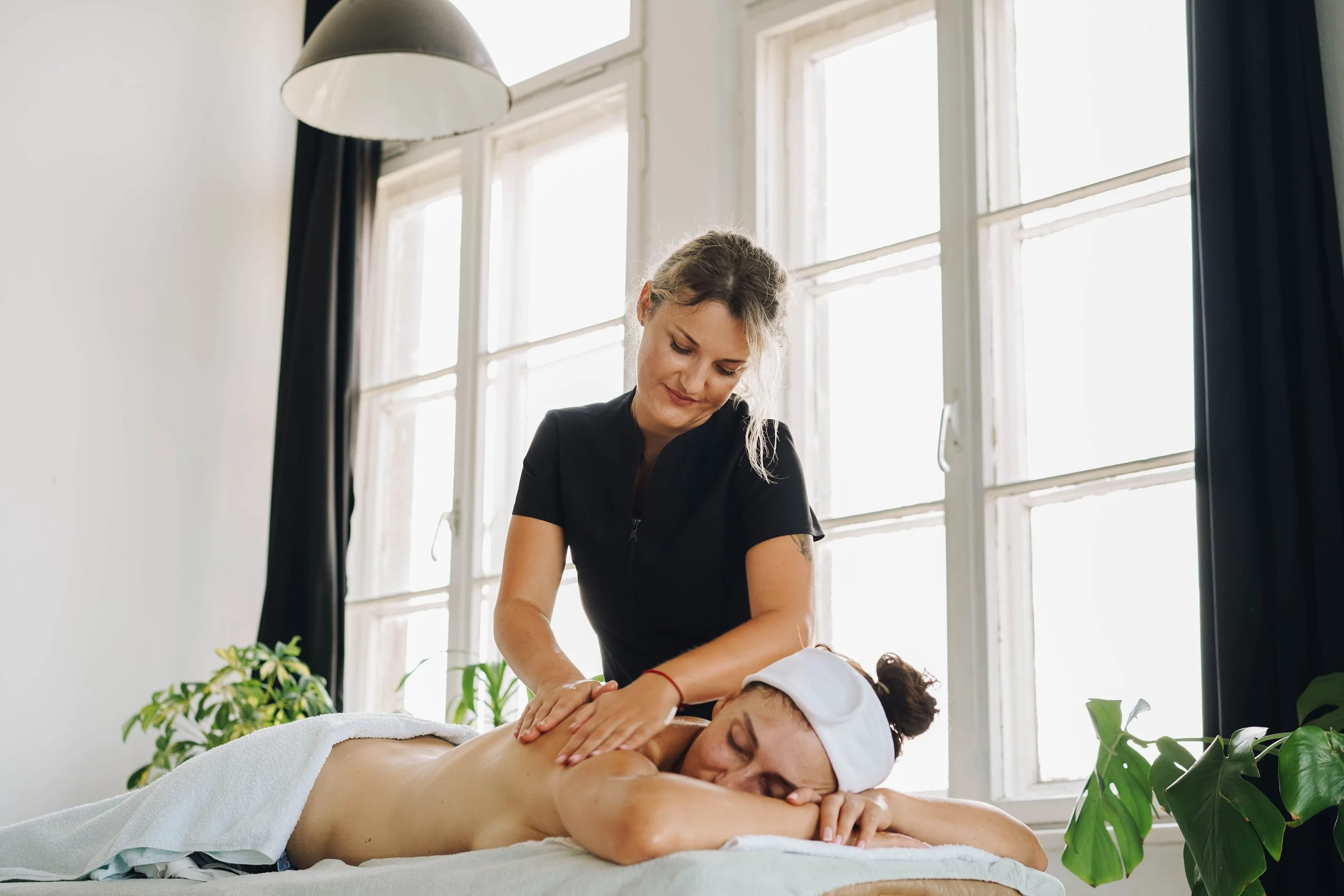
PRESS is a therapeutic massage studio. Sessions are built around what's going on in your body: a stiff neck from a week of deadlines, legs that have run three training cycles in a row, shoulders that carry a toddler and a laptop bag. The work is targeted and grounded in anatomy, and nobody is going to sell you a seaweed wrap.
If you want the longer version, we wrote about therapeutic massage vs spa massage.
We are also not a doctor's office
Here is the other half, which matters just as much. A massage therapist is not a doctor, a physical therapist, a chiropractor, or a psychotherapist. That isn't modesty. It's the scope of the license, and it's there for your safety.
In practice, that means a massage therapist:
Can't diagnose. We can notice that one side of your back feels tighter than the other. We can't tell you why your leg goes numb. That's a question for a doctor.
Can't cure a condition. Massage can ease pain, stiffness, and tension, and that relief is real. It doesn't make a herniated disc, a tendon problem, or arthritis go away.
Can't adjust joints. Cracking the spine is chiropractic, not massage.
Can't replace physical therapy. Strength and movement work after an injury or surgery is a PT's territory. Massage can sit alongside it.
Can't be your psychotherapist. Stress shows up in the body, and many people feel calmer after a session. But processing grief, anxiety, or trauma belongs with a mental health professional.
What a massage therapist can do
Inside that scope, there's a lot of useful ground.
Work on muscle tension and pain in a targeted way, adjusting pressure and technique to what your body is doing that day.
Notice patterns. After enough sessions, a good massage therapist knows your body: the shoulder you hike up when you're stressed, the hip that tightens before a race.
Help you feel more comfortable moving, which can make the rest of your care, like PT exercises or getting back to a sport, easier to keep up with.
Ask good questions and tell you when something sounds like it needs a doctor.
Work around your situation, whether that's pregnancy, recovery from surgery once you're cleared, or a body that's simply been sitting at a desk for nine hours.
What the research actually says
Massage has real research behind it. One of the most careful summaries is the Cochrane review of massage for low back pain (2015), which found that massage eased pain and improved function compared with no treatment.
That matches what we see every day: real relief for a lot of people, especially when massage is part of a regular routine alongside the rest of their care.
Who you're working with at PRESS
Every PRESS massage therapist is licensed by New York State, which requires 1,000 hours of education plus a state exam. We wrote more about what the license means. The short version: you're working with a trained professional who knows anatomy, knows the limits of their role, and takes both seriously.
When we'll suggest someone else
Sometimes the most useful thing a massage therapist can say is "please get this checked." We'll suggest a doctor or other provider if you mention things like numbness or weakness, pain after a fall or accident, swelling with heat or redness, or pain that's getting steadily worse. That isn't us passing you along. It's how good care works.
How to get the most out of a session
Tell us what's going on, including diagnoses, surgeries, and medications.
Mention what your doctor or PT has told you. We'll work with it, not around it.
Say something during the session if the pressure isn't right. You won't offend anyone.
Our five studios are in Williamsburg and Greenpoint in Brooklyn, Union Square and Columbus Circle in Manhattan, and Long Island City, Queens.
FAQ
Is therapeutic massage the same as medical massage?
Not quite. "Medical massage" isn't a separate license in New York. At PRESS, therapeutic means targeted work on what's bothering you, done by a licensed massage therapist. It doesn't mean medical treatment.
Do I need a doctor's note to book?
Usually not. If you're recovering from surgery or a recent injury, check with your doctor first and let us know when you book.
Can a massage therapist tell me what's wrong?
No. They can tell you what they notice in your muscles and suggest you get something checked, but diagnosis belongs to a doctor.
Is massage therapy a licensed profession in New York?
Yes. Massage therapy is licensed and regulated by the New York State Education Department. That's a real professional standard, and it's also a different scope from a doctor or physical therapist.
What's the difference between a massage therapist and a physical therapist?
A physical therapist assesses injuries and builds a rehab plan, usually centered on exercise. A massage therapist works hands-on with muscle tension and pain. The two often work well side by side.
Should I tell my massage therapist about my medications?
Yes. Some medications, like blood thinners, can change how much pressure is comfortable or appropriate, so it helps your massage therapist plan the session.
Can I get a massage instead of seeing a doctor?
Not for anything new, severe, or unexplained. Massage is a good complement to medical care, not a replacement for it.
Read also:
Rachel Beider is the Founder and CEO of PRESS Modern Massage, an independently owned group of massage studios in New York City specializing in personalized, anatomy-informed therapeutic bodywork. A New York State Licensed Massage Therapist and the author of Press Here! Massage for Beginners, Beider founded the company in 2008 with a focus on combining clinical expertise with a modern, client-centered experience. Her work and insights have been featured by publications including The Wall Street Journal, Forbes, Entrepreneur, and Refinery29.