
Deep Tissue Massage vs Sports Massage: How to Choose
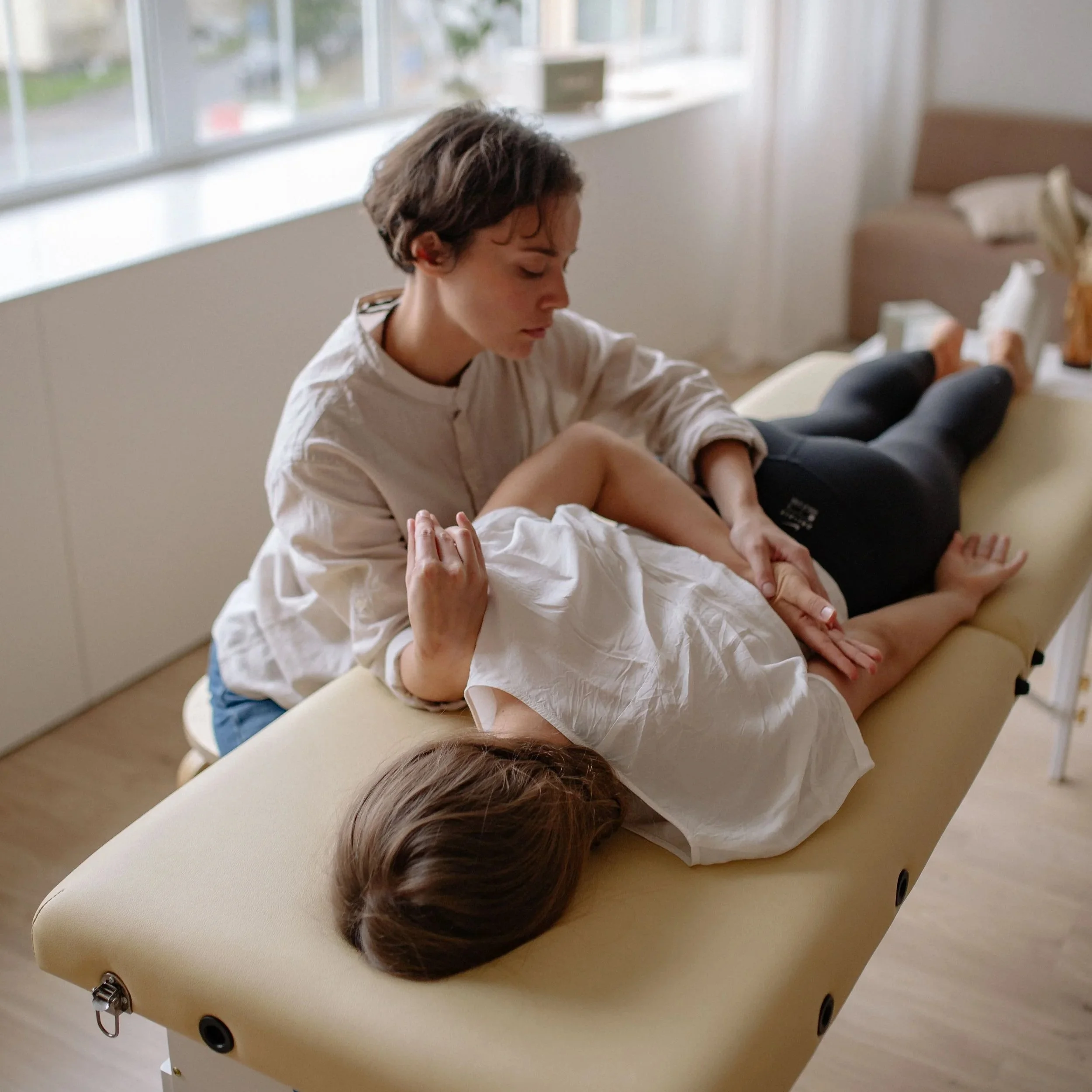
Your body does not care whether your calendar says "athlete" or "office job." It cares that you spent four hours folded over a laptop, carried a toddler up subway stairs, or decided to run ten miles after a month off. In the deep tissue massage vs sports massage debate, the useful question is not which one sounds tougher. It is which approach matches what your body is doing right now.
That distinction gets blurred constantly. "Deep tissue" is often used as shorthand for more pressure, while "sports" gets filed under marathoners and people with suspiciously expensive sneakers. Neither description is quite right. Both can be therapeutic, targeted, and effective when a skilled massage therapist adjusts the work to your goals, your tissue tolerance, and what is actually limiting your movement.
Key Takeaways:
Deep tissue is for what's settled in: Chronic tension, restricted movement, and the desk-born knots that survive every weekend. Slower, focused, layer-by-layer work.
Sports massage is for what you're doing: Organized around training, events, and recovery, often more active, with assisted stretching and movement, and typically more invigorating than sedating.
Pressure isn't the difference: Either session can be firm or gentle. The right choice follows your week, not your pain tolerance.
Deep Tissue Massage vs Sports Massage: The Real Difference
Deep tissue massage is generally organized around persistent tension and restricted movement. Think of the knot between your shoulder blade and spine that has survived three desk setups, two flights, and a week of sleeping badly. The massage therapist works deliberately through the layers of muscle and connective tissue, often spending more time on a particular area rather than treating the entire body with equal attention.
The goal is not to win a pressure contest. It is to address patterns that may be contributing to discomfort: a guarded neck, tight hips, a grippy lower back, forearms that have become permanently shaped like they are holding a phone. Pressure may be firm, but effective deep work is responsive. If you are bracing, holding your breath, or feeling sharp pain, more force is not automatically more useful.
Sports massage is organized around activity. A massage therapist considers the demands of your training, work, event, or recovery period, then shapes the session accordingly. That might mean focused work for calves before a race, hip mobility after a cycling block, shoulder and thoracic work for a swimmer, or a more restorative session after a punishing week of lifting.
The "sport" can be unexpectedly ordinary. Dance rehearsals count. So do warehouse shifts, restaurant work, a new strength program, recreational tennis, and the particular physical stress of pushing a stroller through Williamsburg, Brooklyn. Sports massage is less about whether you compete and more about whether your body is being asked to perform a repetitive or demanding task.
Choose Deep Tissue Massage When the Problem Has Settled In
Deep tissue massage tends to make sense when tension feels chronic rather than tied to one recent workout. Your upper traps are always up by your ears. Your hips feel restricted after sitting, even if you have not trained lately. You wake with a stiff neck after a week of late-night presentations, then spend the next day recreating the same posture.
Expect a sports session to feel more active than the classic melt-into-the-table hour. Your massage therapist may move joints through their range, add assisted stretching for the hips, hamstrings, or shoulders, and occasionally ask you to participate, pressing into resistance or shifting position so a muscle can be worked while it moves. Passive stretching also happens within our regular sessions where it helps, but sports work leans into it. Many people leave feeling more invigorated than sleepy, which is exactly the point when there is training left in the week.
It can also be a good fit when you want a session centered on a few stubborn areas. A massage therapist may work progressively, combining broad, slower strokes with more specific techniques as the tissue allows. You should expect communication. "Deep" is not a preset setting, and bodies vary widely in what feels productive.
There is a trade-off. A focused deep tissue session can leave an area temporarily tender, particularly if it has been guarded for a long time. Plan around that reality. The night before a major race, a high-stakes performance, or a red-eye flight is usually not the ideal moment to request an aggressively intense session for the first time.
Deep tissue massage is also not a substitute for medical evaluation. New numbness, weakness, significant swelling, unexplained pain, or pain after an acute injury deserves attention from an appropriate medical professional. Massage can be part of a sensible care plan, but it should not be asked to solve every plot twist the body invents.
Choose Sports Massage When Timing and Performance Matter
Sports massage is especially useful when the question is, "What does my body need around this activity?" Before a demanding event, the work may be more stimulating and movement-oriented, helping you feel mobile and ready rather than sleepy and overly loose. Afterward, the emphasis may shift toward downshifting, easing the sense of heaviness, and identifying areas that need recovery attention.
For the recreationally active New Yorker, this is often less dramatic than it sounds. Maybe you are training for a half marathon while working near Union Square, Manhattan, and the accumulated load is showing up as tight calves and an irritated-feeling hip. Maybe your weekly basketball game has begun negotiating with your knees. Maybe a new Peloton habit has revealed that your glutes would like a word.
A sports massage can also be useful between workouts, when there is no finish line looming but your body needs help keeping up with a training routine. The massage therapist may focus on range of motion, muscle groups that are repeatedly loaded, and the compensation patterns that arise when one area is doing too much.
What it cannot do is replace training fundamentals. Sleep, progressive loading, nutrition, rest days, and reasonable expectations remain stubbornly relevant. Massage can support recovery and help you notice patterns earlier. It cannot make a sudden volume jump disappear simply because you booked a 60-minute appointment.
Pressure Is Only One Variable
The biggest misconception in deep tissue massage vs sports massage is that one is "hard" and the other is "light." Either session may include firm pressure. Either may include gentler work. The amount of pressure should follow the goal, the area being treated, and your response in the moment.
A good massage therapist pays attention to more than your request for "as deep as possible." They consider whether a muscle is already irritated, whether you can relax into the work, and whether your nervous system is treating the session like a threat. The productive zone is usually specific and tolerable, not an endurance test you later describe as "brutal, but probably good for me."
That is particularly relevant for desk workers. The body can feel densely tight after a day of Slack messages and hunched concentration, but the answer is not always maximal pressure on the neck. Sometimes the more useful path includes the upper back, chest, shoulders, forearms, hips, and the breathing patterns that have been running in the background all day.
What to Tell Your Massage Therapist Before the Session
The best appointment starts before the first stroke. Be specific about what has changed, what activity is coming up, and what has not helped. "My back hurts" is a start. "My right low back gets tight after 30 minutes at my standing desk, and I have a long flight tomorrow" gives a massage therapist much more to work with.
Mention recent injuries, surgeries, medical conditions, medications, skin sensitivity, and any areas you do not want worked on. If you are training, share the activity, how often you do it, and whether you are before or after a key event. If you have a persistent desk issue, point out the tasks that seem to aggravate it: mouse work, driving, carrying a bag on one shoulder, or the current remote-work classic of answering emails from the couch.
Then give feedback during the session. Useful phrases are simple: "That feels like the right spot," "I am starting to tense up," "Could we use less pressure there?" and "That sensation travels down my arm." A session is not a silent exam you can fail. It is a collaboration.
The Better Choice May Be Both, at Different Times
Many people do not need to pledge allegiance to one category. A founder preparing for a charity bike ride may want sports-focused work during training, then deep tissue attention for the neck and shoulders that have been locked up by laptop life. A parent might book a more recovery-oriented session after a weekend of hauling gear and then return later for focused work on long-standing hip restriction.
Your needs can change week to week. The smarter habit is to treat massage as body maintenance with a purpose, not as a once-a-year emergency intervention. Consistency also helps a massage therapist learn the difference between your usual tightness and a new pattern worth adjusting around.
At PRESS
At PRESS, massage therapists tailor anatomy-based bodywork to what is asking for attention, whether that is training recovery, screen-heavy posture, or a familiar pain-in-the-neck situation. Sessions are available in Williamsburg, Brooklyn; Greenpoint, Brooklyn; Union Square, Manhattan; Columbus Circle, Manhattan; and Long Island City, Queens. The useful next step is simply to book the kind of session that fits your week, then tell your massage therapist what your body has been up to.
Read also:
