
Prenatal Massage in Manhattan, Explained
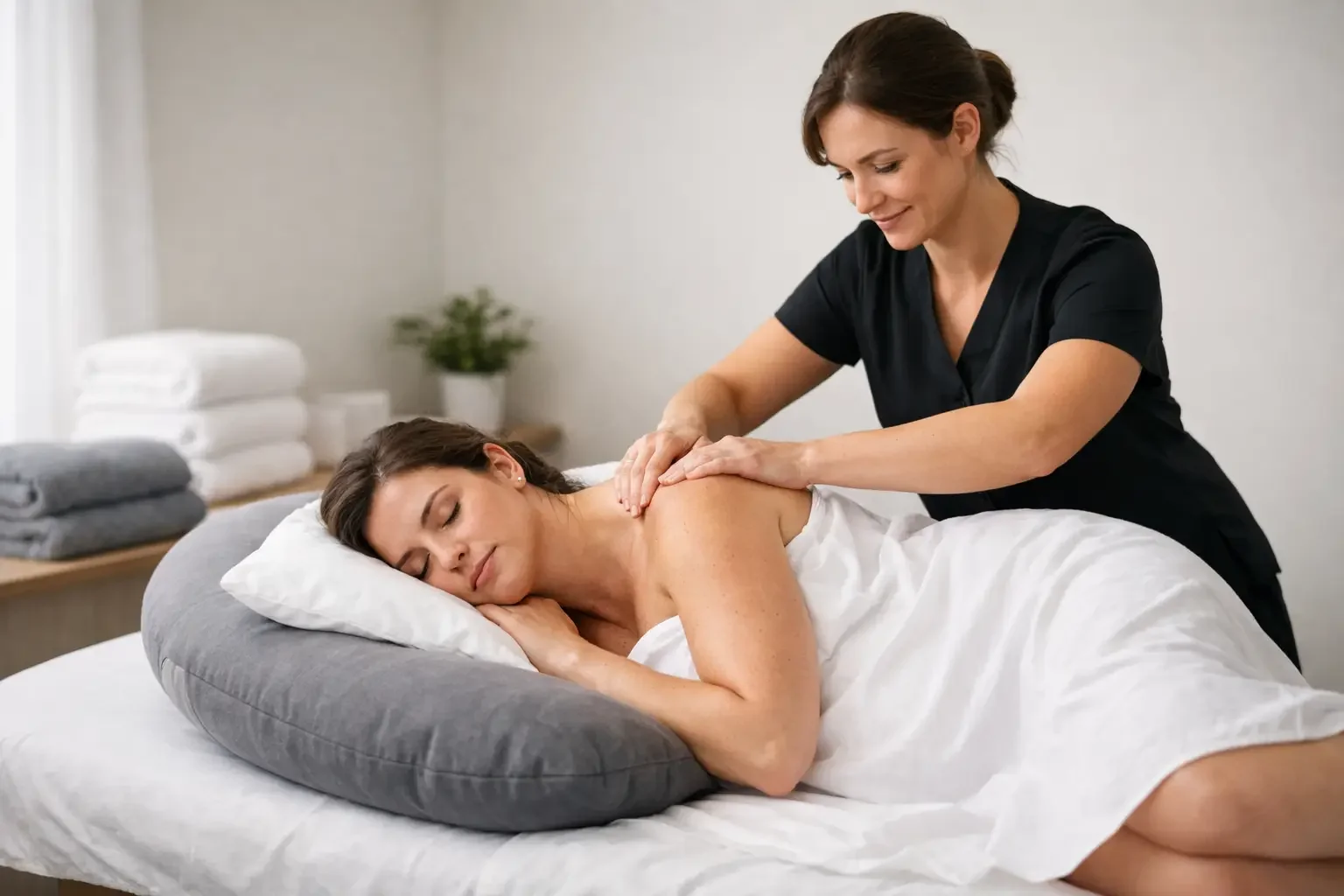
A growing belly changes the geometry of a New York day. The walk from the subway feels longer. Your usual desk chair suddenly has opinions. Sleep gets oddly competitive, with your hips, low back, and shoulders all campaigning for attention at 3 a.m. That is why prenatal massage in Manhattan is less about a vague treat and more about practical body maintenance during a physically demanding season.
The useful version of pregnancy massage meets the moment you are actually in: the second-trimester commuter whose lower back is working overtime, the third-trimester parent trying to stay comfortable through a workday, or the person in early pregnancy who is tired of treating new aches like a personal mystery. The goal is not to promise a perfect pregnancy. It is to create more room to move, rest, and get through the city with less unnecessary discomfort.
What prenatal massage can help with
Pregnancy asks a lot of the musculoskeletal system, and Manhattan does not exactly reduce the workload. Long periods at a laptop can amplify neck and shoulder tension. Walking, stairs, standing on platforms, and carrying the usual daily gear can aggravate tight hips and tired calves. As your center of gravity shifts, the low back often starts doing a little too much.
A skilled massage therapist works with those changing patterns rather than delivering a standard full-body sequence with a pregnancy label attached. Sessions can focus on the areas that are loudest that week: low-back tightness, glute and hip discomfort, upper-back strain, leg fatigue, or the shoulder tension that appears when sleep has become an elaborate construction project.
Massage can also be a useful interruption in the stress-tension loop. Pregnancy does not exempt anyone from work deadlines, family logistics, travel, or the oddly relentless administrative burden of preparing for a baby. When the body is braced all day, gentle, tailored bodywork can make it easier to notice where you are holding tension and leave feeling less compressed.
That said, massage is not a cure-all, a substitute for prenatal medical care, or a guaranteed answer to every ache. Some discomforts need a conversation with an OB-GYN, midwife, or physical therapist. A good massage therapist will respect that line and adjust the session based on how you feel, what your care team has advised, and what is happening in your body that day.
Can you lie face down during a prenatal massage?
At PRESS, yes. This surprises people, and it is one of the most common questions pregnant clients ask. Sessions are performed side-lying or in a supported prone position: face-down on specialized maternity cushions that fully support your belly and distribute your weight safely, something few studios in NYC offer. For many people, lying face down again after months of side-sleeping is half the appeal of the appointment.
Side-lying work offers full access to the back, hips, legs, and shoulders while letting the body settle comfortably, and it is always available. If you want face-down positioning, request it at booking so your massage therapist can prepare the setup. If a position stops feeling right mid-session, say so, switching is normal.
This is one reason to choose a place that treats prenatal care as a distinct format rather than an afterthought. The setup, pressure, pacing, and communication should all reflect pregnancy-specific needs. More pressure is not automatically better, especially on days when your system feels sensitive or swollen. The most effective session may be focused and moderate, with attention to the places where your body is compensating hardest.
Prenatal massage in Manhattan should fit real schedules
The old image of a massage appointment as a four-hour production has never made much sense for New Yorkers, and it makes even less sense during pregnancy. The most helpful appointment is often the one that fits between meetings, before a weekend of family plans, after a flight, or at the point when your hip discomfort has begun to dictate your bedtime strategy. If your week happens in Manhattan, our studios at Union Square and Columbus Circle are built for exactly that kind of booking.
Consistency can matter more than one heroic appointment. Bodies change quickly during pregnancy, particularly as activity levels, sleep, and posture shift. Some people prefer regular sessions to stay ahead of recurring tension; others book when a familiar issue flares. It depends on symptoms, schedule, budget, and guidance from the medical professionals overseeing the pregnancy.
If you already use massage as part of your routine, pregnancy does not have to mean starting from scratch. At PRESS, members can use a monthly massage for a prenatal session with a small upgrade. And if pregnancy timing changes your plans, unused prenatal credits transfer to postnatal massage. That is sensible policy, not marketing theater: due dates have a way of ignoring even the most organized calendar.
What to tell your massage therapist before the session
You do not need to arrive with a perfect anatomical briefing. But a little specificity helps. Mention where you are in pregnancy, what feels different this week, whether you have been traveling, how you have been sleeping, and which movements are setting off discomfort.
Also share any relevant medical guidance, current symptoms, or concerns. If you have been advised to avoid massage, have a high-risk pregnancy, or are unsure whether bodywork is appropriate right now, check with your prenatal care provider first. That is not bureaucratic caution. It is the basic distinction between personalized care and winging it. (For the fuller safety picture, see safe pregnancy massage in NYC: what actually matters.)
During the session, keep speaking up. If pressure feels like too much, a position is uncomfortable, or you suddenly realize that your left hip is the actual problem and not the right one, say it. Your massage therapist is reading tissue and movement patterns, but you are still the only person with access to the full internal group chat of your body.
The case for treating tension before it becomes your personality
There is a particular kind of pregnancy discomfort that becomes easy to normalize because everyone tells you it is normal. Yes, some degree of physical change and soreness is expected. But "common" does not mean you have to white-knuckle it through every work call, dinner reservation, and block-long walk home.
Addressing tension can be especially valuable for people whose days already involve repetitive demands: laptop work, design work, long commutes, caring for older children, or training that has not fully paused. Pregnancy often exposes the weak points in an existing routine. The shoulder that always tightens during deadlines may tighten faster. The low back that complains after a long flight may now complain after a long meeting.
Massage is most useful when it is part of a broader approach to feeling functional. That can include changing how often you get up from your desk, adjusting workout intensity, using support while sleeping, asking for help with heavy bags, and following medical guidance when something does not feel right. Not glamorous, perhaps. Very effective, often.
After the appointment: pay attention, not pressure
The ideal post-massage plan is pleasantly unambitious. Give yourself a little time before running directly to another obligation if possible. Notice whether walking feels easier, your shoulders sit lower, or your hips feel less guarded. Gentle movement and hydration can feel good, but there is no need to turn the rest of the day into a wellness project.
If a session helps, use that information. It can guide the next appointment: perhaps more work around the upper back after computer-heavy weeks, more attention to hips after travel, or a shorter interval between sessions as your body changes. The point is to build an informed routine around what is actually happening, not follow a generic pregnancy checklist.
At PRESS
PRESS offers prenatal and postnatal massage with licensed massage therapists at our Manhattan studios in Union Square and Columbus Circle, and across the city in Williamsburg, Greenpoint, and Long Island City, Queens. When you are ready, book here, request face-down at booking if that is your preference, and ask for care that makes room for the body you have today.
Read also:
