
Sports Massage for Tennis Players in NYC
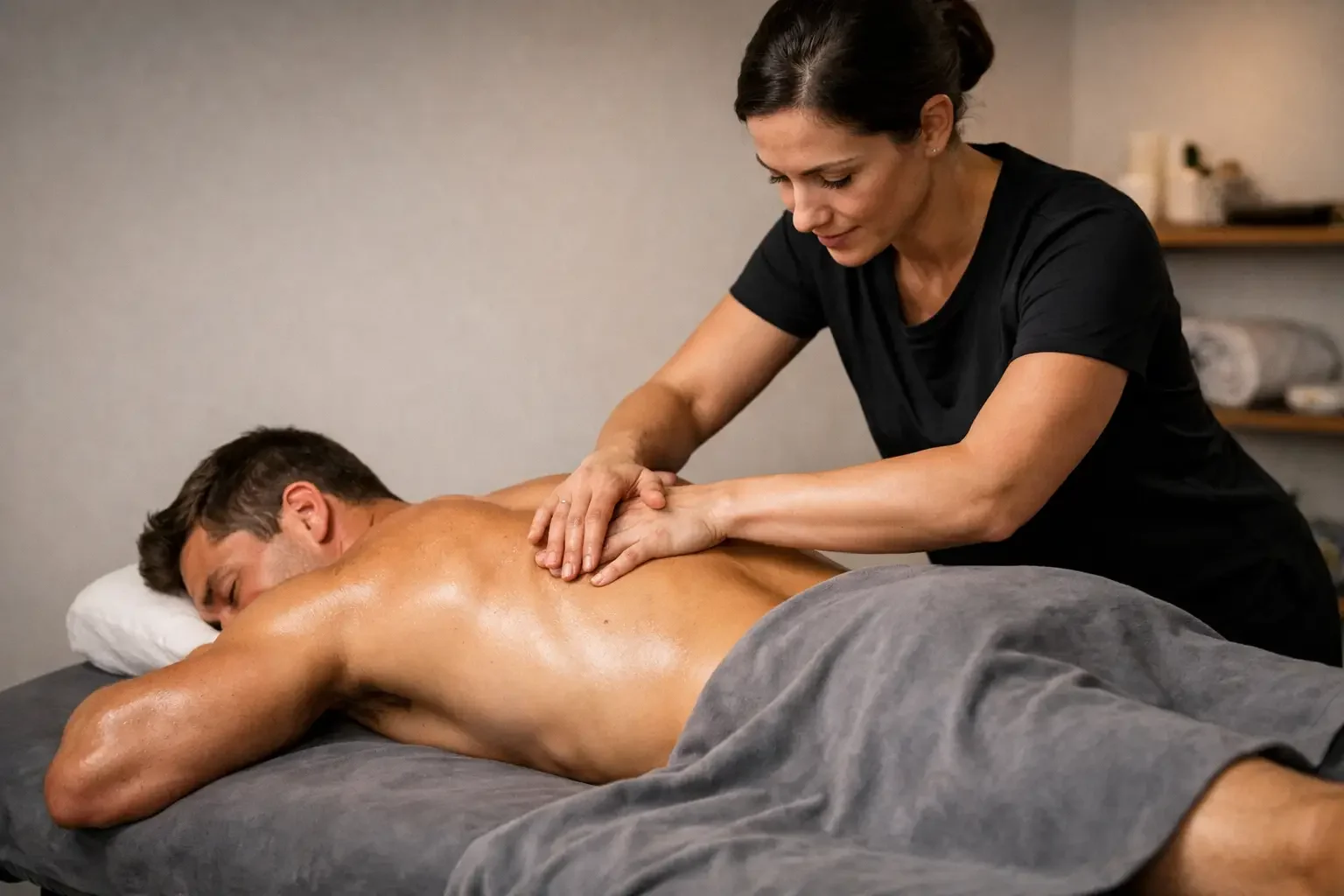
A tennis match can be over in 90 minutes. The feeling that your serving shoulder has become a slightly hostile piece of office furniture can linger until Thursday. That is the particular logic of sports massage for tennis players in NYC: it is less about a ceremonial recovery day and more about keeping a small problem from becoming the thing you notice every time you reach for a carry-on or open a heavy door.
New York tennis players are also not operating in a vacuum. The US Open is on in Flushing, Queens, which means every public court from McCarren Park in Williamsburg, Brooklyn to Riverside Park in Manhattan is suddenly booked by people rediscovering their serve. You play a league match, squeeze in a clinic after work, then spend the next day at a laptop with your phone in the other hand. The body does not divide those activities into neat categories. It just registers cumulative load.
What Tennis Actually Asks of Your Body
Tennis is a full-body sport with a reputation for being hard on the elbow, but that is only part of the story. A serve transfers force from the ground through the calves, hips, trunk, shoulder blade, shoulder, forearm, and hand. A late forehand adds a quick twist. A backhand, especially when fatigue is involved, can ask the upper back and wrist to compensate for poor positioning. Then there is the stop-start work: lunging, decelerating, recovering, and doing it again on hard courts.
The most common complaint is often not one dramatic injury. It is the low-grade accumulation: a tight forearm after serving, a shoulder that feels restricted on the toss, an achy low back after a long three-set match, or calves that feel permanently one subway stair away from mutiny.
Massage cannot correct every tennis problem. It will not repair a tendon tear, replace strength training, or make an overloaded match schedule biologically reasonable. Sharp pain, sudden weakness, swelling, numbness, or pain that changes how you use your arm merits evaluation from an appropriate medical professional. But thoughtful bodywork can be useful when muscular tension, fatigue, and movement restriction are part of the picture.
Sports Massage for Tennis Players in NYC Is About Patterns
The useful distinction is not "deep tissue" versus "relaxing." It is whether a massage therapist is paying attention to the pattern behind the sore spot.
A tennis player with tennis elbow, or the lateral elbow pain that gets that label, may indeed have a very tender forearm. But treating only the tender point can miss the larger arrangement: grip tension, a stiff wrist, a shoulder that is not rotating comfortably, an upper back that has spent the workweek rounded toward a screen, or a serve volume that climbed too quickly. The elbow is often where the complaint lands, not necessarily where the workload began.
A skilled massage therapist can assess how different areas feel and move, then focus on the tissues most likely to be contributing to that day's limitation. That may mean work around the forearm flexors and extensors, the shoulder and shoulder blade, the chest, upper back, hips, glutes, or calves. The session should be adapted to your current training load, not performed from a generic athlete script.
Pressure is only one tool. More pressure is not automatically more effective, particularly when an area is already irritated. Sometimes the productive session is specific work to a few overloaded areas paired with calmer, broader work elsewhere. You should leave feeling more mobile and less guarded, not like you have been in a dispute with a meat tenderizer.
The shoulder and upper back: the serve's supporting cast
When a serve feels stiff, players naturally focus on the shoulder. Fair. But the shoulder blade, upper back, chest, and neck matter too. Hours of keyboard work can leave the front of the chest and neck doing more than their share, while the upper back becomes less available for rotation and extension. Add overhead serving, and the shoulder may feel like it has been asked to host two jobs with one very tired staff.
Massage can help address the muscular tightness that accompanies this pattern and make movement feel easier in the short term. The durable answer may also include a coach's look at mechanics and a strength program that builds shoulder, upper-back, and trunk capacity. Good recovery should not pretend it can do everyone else's job.
Forearm and wrist: where grip becomes a tax
Tennis elbow gets all the press, and the forearm is indeed working on nearly every shot, especially for players who grip tightly under pressure or play with a heavier, demanding racquet setup. A massage therapist may use targeted work through the forearm and hand, while also checking related tension higher up the arm and shoulder.
Timing matters here. If the elbow is hot, acutely painful, or increasingly sensitive after play, aggressive work is usually not the clever move. A lighter approach, reduced court volume, and clinical guidance may be the better call. If discomfort has been gradual and muscular, a targeted session can be part of a sensible plan to restore comfort before the issue gets louder.
Hips, calves, and low back: the unglamorous power source
Tennis rewards rotation and punishes abrupt braking. Tight hip flexors can make a deep split step or open-stance forehand feel less available. Overworked glutes and calves can change how you load into the ground. A low back that feels cranky after a match is sometimes reacting to the cumulative demands below and above it, rather than acting alone.
This is where full-body thinking earns its keep. Work through the hips, glutes, thighs, calves, and low back can be useful when your movement feels generally compressed after play. It is especially relevant for players balancing court time with commuter walking, strength classes, and the peculiar New York habit of treating stairs as a personal speed trial.
When to Book Around Your Match Schedule
The best timing depends on what you need. For general maintenance, booking on a rest day or a lighter training day gives you room to notice how your body responds. If you are playing a tournament or an important league match, a session several days beforehand may make more sense than trying an intense new treatment the night before.
After a hard match, the goal is usually to settle down and restore comfortable motion, not chase heroic intensity. A focused massage can be useful when you feel stiff or generally beaten up, but hydration, food, sleep, and an easier day of movement still matter. Recovery is annoyingly democratic that way.
For players with recurring tension, consistency tends to be more useful than waiting until something is unbearable. A monthly session may be enough for someone playing once a week. Someone training multiple times weekly, traveling for matches, or carrying desk-related neck and shoulder tension may benefit from a more frequent rhythm. The right interval is the one that fits your body, schedule, and budget without turning recovery into another performance metric.
What to Tell Your Massage Therapist
Specificity makes a session better. Mention whether your pain appears during the serve, on backhands, after sitting, or only the morning after a match. Say which side you play with, how often you are on court, whether you recently changed racquets or strings, and what feels limited: rotation, reaching overhead, bending low, or simply walking down stairs without negotiating with your calves.
Also say what is coming next. A massage therapist should know if you have a match tomorrow, a flight that evening, or a week off court. That context changes the appropriate pace and pressure. If you have been diagnosed with an injury, are managing a medical condition, or have new symptoms, share that too.
The Smarter Version of Recovery
Tennis players are often excellent at buying gear and remarkably casual about maintenance. A new overgrip is inexpensive and emotionally satisfying. Addressing the shoulder and forearm tension that has been building for six weeks requires slightly more honesty.
The point of sports-focused massage is not to make you invincible or to justify playing through pain. It is to give your body a better chance of handling the life you actually have: court time, work, travel, parenting, screens, and the occasional match that becomes much more competitive than anyone promised it would.
At PRESS
At PRESS, licensed massage therapists provide anatomy-based care that can be tailored to tennis-related tension, recovery, and mobility. Find a session at Williamsburg, Brooklyn; Greenpoint, Brooklyn; Union Square, Manhattan; Columbus Circle, Manhattan; or Long Island City, Queens.
Book a session before the forearm tightness from six weeks ago becomes the thing you play around.
