
Recovering from a hip replacement in New York comes with its own course of obstacles. The four-story walk-up. The subway stairs at a station with no elevator, or one where the elevator is "temporarily" out. The curb on the corner that suddenly seems taller than it used to.
Most people do remarkably well after hip replacement. But the months after surgery can bring a lot of stiffness and soreness in places you didn't expect. Here's how massage after hip replacement can fit in, and the ground rules.
Key takeaways
Check with your surgeon before booking, and tell us your surgery date and any movement precautions.
Massage can ease the sore back, tight thigh, and tired arms that often come with hip replacement recovery.
It doesn't replace physical therapy, which is where your strength and walking come back.
New calf pain or swelling, or redness at the incision, means call your doctor, not book a massage.
Start with your surgeon
Before you book, check with your surgeon or care team. Ask whether massage is okay at this point in your recovery and whether there's anything to avoid. Many surgeons want the incision fully healed and early recovery well underway before any massage near the hip.
Then tell us about your surgery when you book. That includes when it happened, which side, and any movement precautions you were given. Some surgical approaches come with rules about how far to bend the hip or whether to cross your legs, and those affect how you're positioned on the table.
What massage can help with
A new hip changes how you walk, sit, and sleep for a while, and the rest of the body compensates. Common complaints after hip replacement include:
A sore, tight lower back from walking differently
Tension in the thigh and buttock on the surgical side
Overworked muscles on the other leg
Shoulders and arms tired from a cane or walker
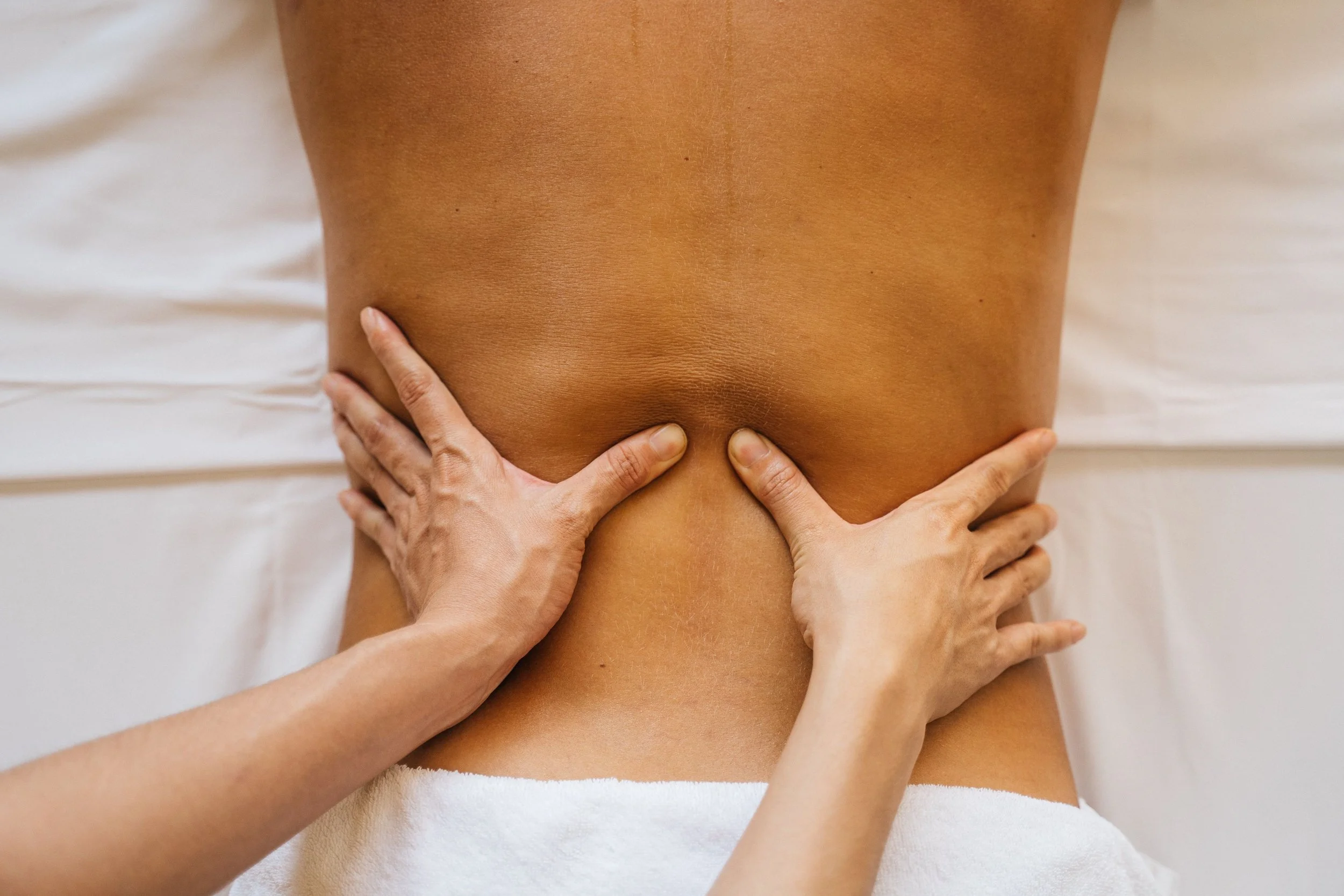
Once you're cleared, a licensed massage therapist can work on those areas. Many people find it eases stiffness and makes moving and sleeping more comfortable, which can help them keep up with the exercises their PT prescribes.
What massage can't do
Massage doesn't replace physical therapy. Your strength and walking come back through the PT work, and that's where the real recovery happens. Massage also doesn't speed up how the bone and tissue heal around the implant. It's support for how you feel along the way.
What a session looks like
Expect a conversation about your surgery and your precautions before anything else. Positioning is usually side-lying or on your back, with pillows to keep the hip in a safe position. The incision itself is left alone unless your surgeon has said otherwise and it's well healed. Pressure on the surgical side starts gentle.
The work often covers more than the hip: back, other leg, shoulders. Recovery is a full-body project.
When to skip massage and call your doctor
Don't book a massage, and contact your doctor right away, if you notice:
New pain, swelling, warmth, or redness in your calf or thigh. These can be signs of a blood clot, which needs urgent care.
Redness, heat, drainage, or opening around the incision
Fever
Sudden new hip pain, or a feeling that the hip has shifted
Shortness of breath or chest pain, which needs emergency care
How long does hip replacement recovery take?
It varies, but here's a rough picture from the American Academy of Orthopaedic Surgeons: most people can do most of their early movement "don'ts" after about 6 to 8 weeks, swelling can stick around for 3 to 6 months, and PT exercises usually continue for at least 2 months after surgery.
Massage fits best once your surgeon has cleared you, as support for how you feel during those months.
Getting around during recovery
A few practical things for recovering in the city: check MTA elevator status before you leave, give yourself extra time between appointments, and pick studios that work with your mobility for now. Many of our clients in recovery choose the studio closest to home, even if it's not their usual one.
Where to book
PRESS has studios at Columbus Circle, Manhattan, Union Square, Manhattan, Williamsburg, Brooklyn, Greenpoint, Brooklyn, and Long Island City, Queens. Before you go, call the studio to ask about stairs or entry access so you know what to expect. When you book, include your surgery date and any precautions in the notes.
FAQ
How soon after hip replacement can I get a massage?
It depends on your surgery and recovery. Your surgeon is the right person to answer, so ask before booking.
Can a massage therapist work on my scar?
Only once it's fully healed and your surgeon has okayed it. Until then, the work stays away from the incision.
Can I lie on my side?
Often, with pillows to protect the hip. Your massage therapist will follow whatever precautions you were given.
Is massage safe after hip replacement?
Often, once your surgeon has cleared you. The session is planned around your precautions, with careful positioning and gentle pressure on the surgical side.
Can massage help with swelling after hip replacement?
Some swelling is normal for months after surgery, and that's a question for your surgeon. New swelling in one calf or thigh needs a doctor right away.
Do I need a doctor's note to book?
We don't require one, but we do ask that you check with your surgeon first and share any precautions when you book.
Why does my other hip or back hurt after surgery?
Walking differently for weeks puts extra work on the rest of the body. That compensating tension is often where massage helps most.
Read also:
Rachel Beider is the Founder and CEO of PRESS Modern Massage, an independently owned group of massage studios in New York City specializing in personalized, anatomy-informed therapeutic bodywork. A New York State Licensed Massage Therapist and the author of Press Here! Massage for Beginners, Beider founded the company in 2008 with a focus on combining clinical expertise with a modern, client-centered experience. Her work and insights have been featured by publications including The Wall Street Journal, Forbes, Entrepreneur, and Refinery29.