
Massage for Seniors in NYC That Respects Real Bodies
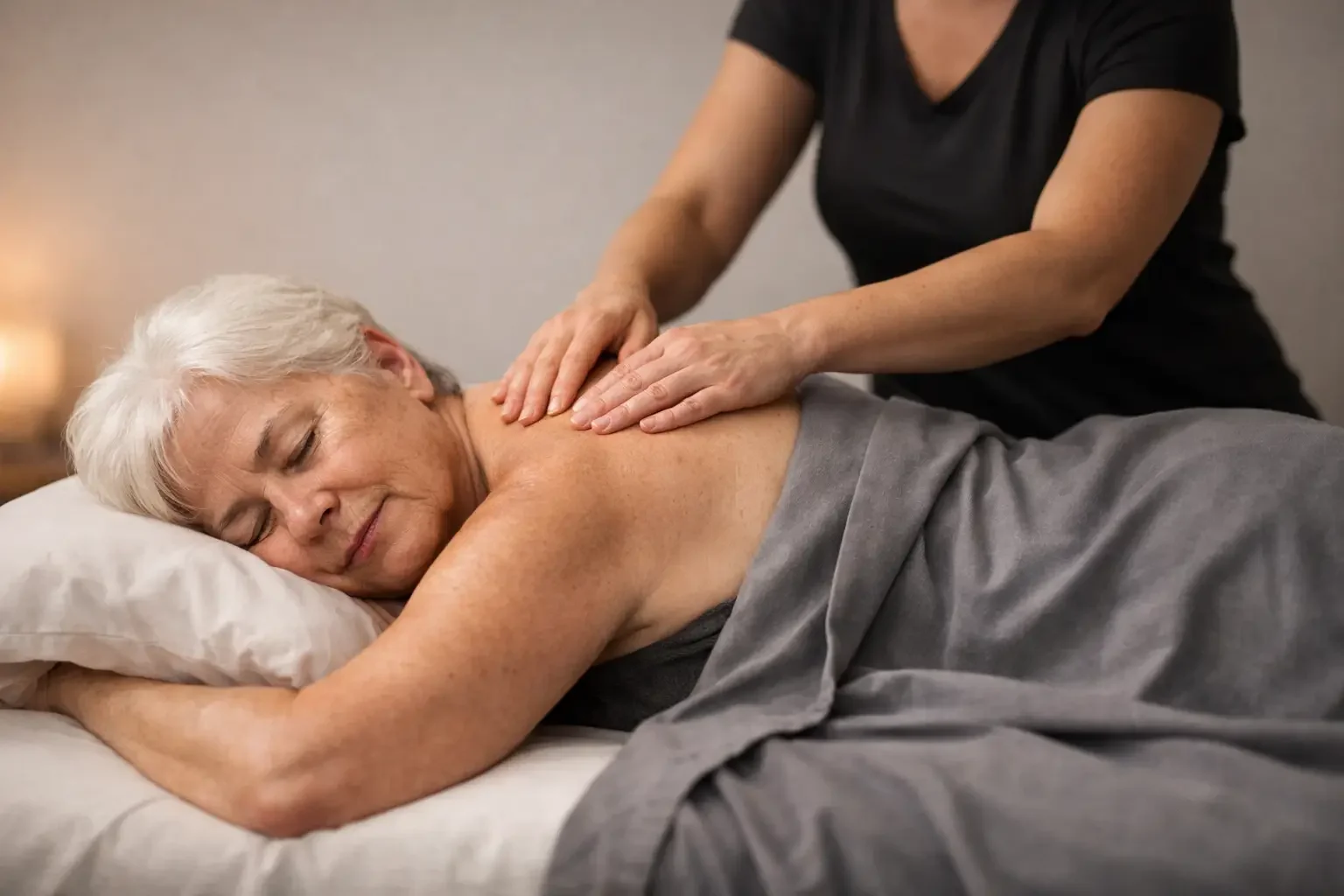
New York is very good at making people feel prematurely ancient. There are the subway stairs, the laptop hunch, the grocery bags, the bad sleep after a late dinner, and the peculiar shoulder tension created by trying to hear someone in a crowded restaurant. For older adults, those ordinary city frictions can add up faster, and the question is not whether massage feels nice. It is whether it can be adapted thoughtfully enough to feel useful.
Massage for seniors in NYC should not look like a generic spa appointment with softer music. The best sessions start with how a person actually moves through the week: Which stairs are difficult? Does the neck stiffen after reading? Is sleep interrupted by hip discomfort? Has a new medication, joint replacement, osteoporosis diagnosis, or recent fall changed the picture? A skilled massage therapist uses that information to make smart choices about pressure, positioning, pace, and what to leave alone.
The goal is comfort and function, not heroic pressure
There is a persistent idea that a massage has to hurt a little to count. That logic is unhelpful at any age, and especially off-base for older bodies. Tissue can be more sensitive, skin may bruise more easily, and recovery may take longer. The useful question is not, "Can you get deep enough?" It is, "Can this leave me moving and feeling better tomorrow?"
For some people, a slower full body massage with light-to-moderate pressure is exactly right. For others, the most productive work is focused: careful attention to the neck and shoulders after years of desk work, the calves and feet after walking less steadily, or the upper back that has gradually rounded toward a phone or a favorite reading chair.
Pressure is only one variable. A massage therapist can also change tempo, use broader contact rather than sharp elbow work, support joints with bolsters, and check in more often. None of that is "lesser" massage. It is competent adaptation.
Why massage can make sense as we get older
Aging is not one condition, and neither is senior care. One 70-year-old is training for a charity walk; another is recovering confidence after a difficult winter indoors. Some people have chronic arthritis, some have no meaningful pain at all, and plenty are simply tired of feeling stiff when they stand up from the couch.
Massage may help some people feel more comfortable in their bodies, improve their sense of ease with everyday movement, and support relaxation before sleep. Research on massage and pain varies by condition, so it is worth resisting grand promises. It does not repair a worn joint, reverse osteoporosis, or replace medical care. But when muscle guarding, stress, sedentary habits, and poor sleep are part of the problem, hands-on work can be a reasonable part of a larger plan.
That larger plan might include physical therapy, strength training, walking, medical treatment, or a better chair setup. Massage works best when it is not asked to perform a one-session miracle. Think maintenance, not rescue mission.
The social benefit is real, too
Older adults are often prescribed movement but given very little supportive touch. That is an odd gap in modern health culture. A well-run massage appointment offers focused attention to the body without requiring someone to perform wellness, explain themselves in a group class, or become a person who owns resistance bands in six colors.
The value is not merely emotional, though feeling cared for matters. It is also practical: regular check-ins create a chance to notice patterns. Perhaps lower-back tightness appears after long car rides to see family. Perhaps headaches cluster after hours spent at a tablet. Those observations can lead to more useful adjustments between sessions.
When massage for seniors needs more caution
A good intake is not paperwork theater. It is how a massage therapist learns whether massage is appropriate today and how it should be modified. Older clients should mention recent surgeries, joint replacements, osteoporosis or osteopenia, diabetes, neuropathy, varicose veins, cancer treatment, blood-clot history, circulation concerns, skin fragility, and any medication that affects bleeding or bruising.
Some situations call for a physician's guidance before booking, particularly unexplained swelling, acute pain, fever, new numbness or weakness, a recent fracture, or a suspected blood clot. Massage should not be used to investigate symptoms that need prompt medical attention. If a person is under active medical care, it can help to ask their clinician whether there are restrictions around pressure, body areas, or positioning.
This is not a reason to rule massage out. It is a reason to skip the one-size-fits-all approach. A responsible massage therapist welcomes relevant medical context and does not treat disclosure as an inconvenience.
Positioning is part of the treatment
The table setup can determine whether an appointment is restorative or simply an extended lesson in tolerating discomfort. Getting onto and off a high table may be awkward. Lying facedown can strain the neck, hips, or shoulders. Lying flat may aggravate breathing issues or lower-back pain.
Speak up before the session starts. Side-lying work, extra bolstering, shorter periods in one position, or additional support under the knees and ankles may be more comfortable depending on the person and their goals. There is no prize for staying in a position that makes the body brace.
This is particularly relevant for adult children booking on a parent's behalf. A generous gift can become an annoying errand if the parent feels rushed, overheated, or unable to explain what hurts. Let them lead on comfort, and make sure they know they can ask for less pressure, more support, or a pause at any point. (A gift card works well here precisely because it lets them choose their own timing.)
How to choose a massage therapist without guessing
In a city with endless wellness options, the simplest filter is specificity. Look for a licensed massage therapist who asks questions before laying hands on anyone. The conversation should include current symptoms, health history, preferred pressure, and the practical outcome the client wants: easier sleep, less neck tension, more comfortable walking, or simply an hour that does not leave them sore.
It also helps to choose a setting that feels accessible rather than aspirational. Consider proximity to transit or a car drop-off, stairs and elevators, bathroom access, appointment timing, and whether a family member can help coordinate. The best location is often the one a person can visit consistently without turning the appointment into an expedition. Our Columbus Circle studio sits a block from the park and several subway lines, which makes it a practical choice for Upper West Side regulars.
Consistency matters because the body benefits from context. When a massage therapist knows that the left shoulder always acts up after gardening or that ankle swelling is worse by evening, the work can become more precise. A single massage can offer relief. A sensible routine gives both client and massage therapist more information.
Make the first session easier
A first appointment goes better when the client arrives with a short, honest brief. They do not need a medical dissertation. A few plain sentences are enough: "My hands are sensitive," "I had a knee replacement last year," "I get dizzy when I sit up quickly," or "Please avoid my right shoulder." (Here is what a first visit looks like, if that helps settle nerves.)
Hydration, a light meal beforehand, and unhurried time afterward are also practical choices. There is no need to force a post-massage workout or sprint toward the next obligation. Notice how the body feels later that day and the following morning. If there is lingering soreness, the next session may need less pressure, a different focus, or more time spent on calming work.
The useful standard is simple: massage should fit a person's life better, not demand that they become a different kind of person to receive it.
At PRESS
Thoughtful bodywork is available at our studios in Williamsburg, Brooklyn; Greenpoint, Brooklyn; Union Square, Manhattan; Columbus Circle, Manhattan; and Long Island City, Queens. A full body massage can be tailored around comfort, mobility, and the very specific wear of city living. Book here when the goal is not to endure more, but to move through the week with a little less friction.
Read also:
Written by Rachel Beider, LMT, founder of PRESS Modern Massage. Rachel is a New York State–licensed massage therapist and AMTA member with nearly two decades of experience in massage therapy and wellness.
