
Massage for Shoulder Pain in NYC: The Wider Map
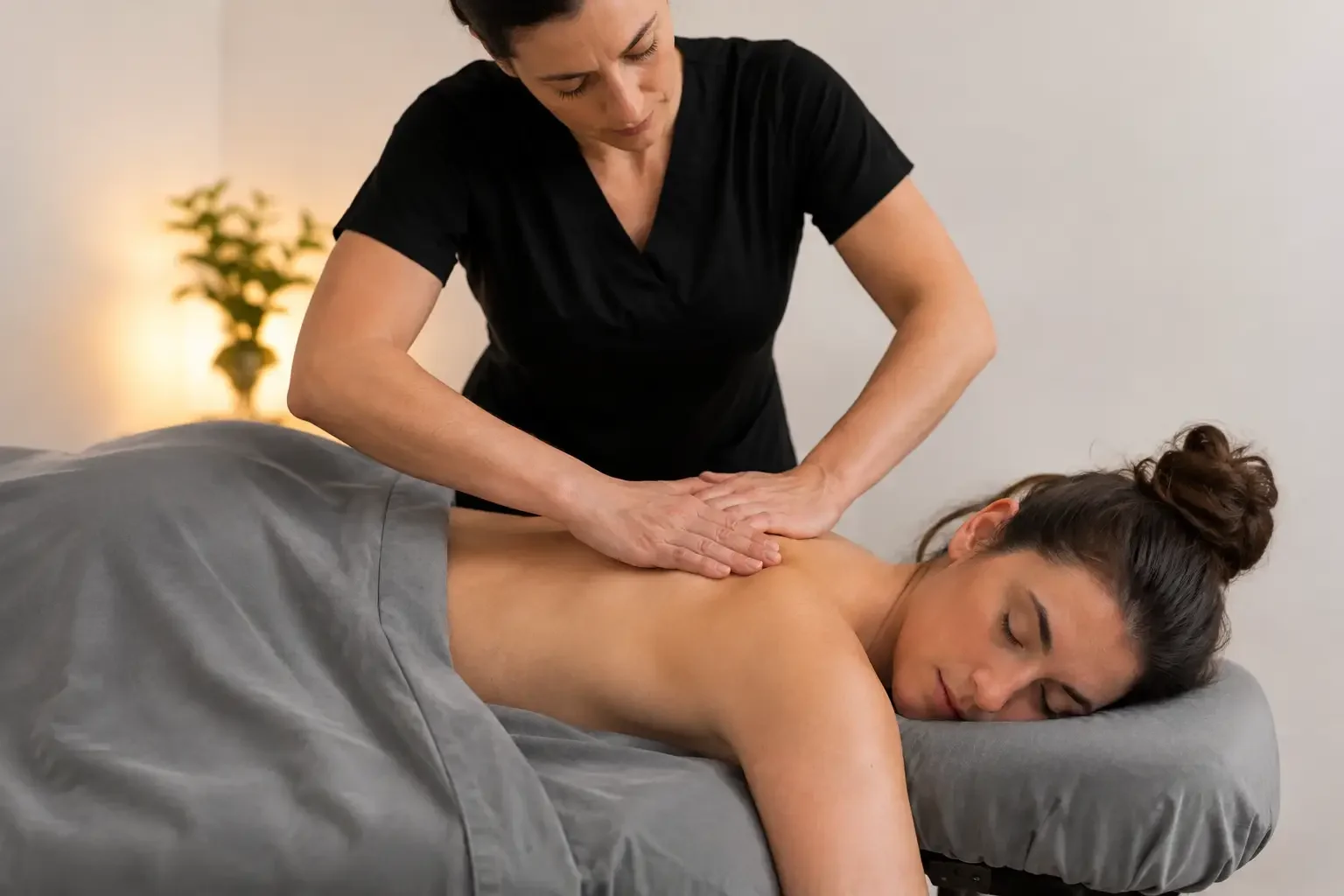
Your shoulder is not impressed by your ergonomic keyboard, your standing desk, or the fact that you closed your laptop before midnight. It has spent the week holding a tote bag on one side, hovering toward a second monitor, bracing during a crowded subway ride, and perhaps doing overhead presses on Saturday. Searches for massage for shoulder pain in NYC are usually less about luxury than a very practical question: why does this one spot keep feeling like it has a personal grievance?
The answer is rarely just the shoulder. The joint is a busy intersection for the neck, upper back, rib cage, chest, and shoulder blade. A good massage session should take that wider map seriously, rather than treating the sorest point as a button that needs to be pushed harder.
Why shoulder pain has become a New York office perk
Remote work did not eliminate desk tension. It simply gave it better lighting and more opportunities to work from a couch. Whether you work from an office in Union Square, Manhattan, a kitchen table in Williamsburg, Brooklyn, or three different places in one day, the pattern is familiar: head slightly forward, shoulders subtly lifted, arms reaching toward a screen.
That position does not automatically cause injury. Bodies are more adaptable than posture panic suggests. But hours of low-level holding can leave the muscles around the neck, upper back, chest, and shoulder blade feeling overworked and under-rested. Add stress, shallow breathing, poor sleep, a heavy commute bag, or a new training plan, and the area can become reliably cranky.
The shoulder also has a talent for borrowing trouble. Tightness in the chest can make reaching overhead feel restricted. A stiff upper back can change how the shoulder blade moves. Neck tension can refer discomfort toward the top of the shoulder or down the arm. This is why the classic request, "please get the knot near my shoulder blade," is useful information, but not a complete treatment plan.
What massage for shoulder pain can realistically do
Massage can help reduce the feeling of muscular tightness, improve short-term comfort and range of motion, and give an overworked area a chance to downshift. For plenty of desk-bound people, that means turning their head more easily, reaching for a coat without a wince, or getting through a meeting without constantly rolling one shoulder.
The evidence on massage for pain is promising but not magical. Benefits can be meaningful, especially for neck and shoulder tension, though the duration and degree of relief vary by person and by the source of pain. A massage therapist cannot diagnose a rotator cuff tear, repair a joint, or erase the workload that got you here. What skilled bodywork can do is address modifiable soft-tissue tension and help you notice the habits that keep feeding it.
That distinction matters. The best session is not necessarily the one that leaves you dramatically sore the next day. More pressure is not automatically more effective. If your shoulder is guarding because it is irritated, aggressive work can make it push back. A thoughtful massage therapist adjusts pressure, pace, and focus based on how your body responds in real time.
The session should not be all shoulder, all the time
For shoulder pain, useful work often includes the upper back, neck, chest, lats, and the muscles around the shoulder blade. Depending on your symptoms, a massage therapist may also pay attention to how your ribs move with breathing or whether one side is doing all the work when you rotate your neck. A focused back, neck and shoulders session is usually the right format for exactly this reason: it covers the whole region rather than one square inch of it.
This is not a sales pitch for a full-body investigation every time you have a tight trapezius. It is simply anatomy. The shoulder is designed to move with the rest of you, and it tends to complain when the rest of you is ignored.
At the start of a session, be specific about what hurts, when it hurts, and what feels limited. "My right shoulder is tight" is a start. "It pinches when I reach into the back seat, and I get a headache after laptop days" gives a massage therapist something far more useful to work with. Mention old injuries, recent workouts, numbness or tingling, and whether discomfort travels down the arm.
The desk-worker shoulder and the gym shoulder are not the same problem
A laptop shoulder often feels like a broad, dull band of tension from the neck into the top of the shoulder, sometimes paired with headaches or jaw clenching. The goal is usually to reduce accumulated tension, create more ease through the upper back and chest, and avoid turning a sensitive spot into a bruising project.
A training-related shoulder can be more specific. Maybe it flares after pull-ups, swimming, tennis, or a sudden burst of "I am becoming a person who does kettlebells." In that case, massage may be useful as part of recovery, but it should not be used to bulldoze through sharp pain. The next move might be modifying a few workouts, rebuilding load gradually, or getting an assessment from an appropriate medical professional if symptoms persist.
Parents have their own category of shoulder issue: the one-sided carry. Holding a child, a car seat, or a baby bag on the same side for months is repetitive labor disguised as family logistics. Massage can be particularly helpful for the upper-back and neck tension that comes with it, alongside the unglamorous but effective strategy of switching sides more often.
What to do between massage sessions
A session works best when it is not asked to compensate for every hour of your week. You do not need a complicated corrective-exercise spreadsheet. You need a few realistic interruptions to the pattern.
If you work at a screen, change position before you become uncomfortable rather than waiting for your shoulder to file a formal complaint. Place frequently used items within easy reach, support your forearms when possible, and take brief movement breaks between blocks of focused work. A few shoulder rolls will not solve everything, but standing up, walking, gently rotating your upper back, and letting your arms swing can make a difference over a long day.
For training soreness, think in terms of load rather than toughness. If a movement consistently provokes shoulder pain, lower the weight, reduce volume, change the range, or take a break from that motion while you sort out what is happening. Sleep and recovery are not glamorous variables, but they are variables. A shoulder that is underslept, stressed, and repeatedly asked to perform may stay irritated longer.
Consistency can also matter more than the occasional rescue session. If your body predictably tightens up after long workweeks or hard training blocks, regular massage may help you manage that pattern before it reaches the point where putting on a jacket becomes theater.
When shoulder pain needs more than massage
Massage is appropriate for many kinds of muscular tension, but some symptoms call for medical evaluation first or alongside bodywork. Seek prompt care for shoulder pain after a significant fall or impact, a visible deformity, or sudden inability to move the arm.
Treat shoulder or arm pain that arrives with chest pain, shortness of breath, sweating, nausea, or jaw discomfort as an emergency rather than a massage question. Left-sided shoulder and arm pain can occasionally be referred from the heart, and that is not a wait-and-see situation.
It is also worth checking in with a clinician when pain is severe, wakes you regularly at night, steadily worsens, comes with persistent numbness, tingling, or weakness, or has not improved after a reasonable period of modified activity and conservative care. Smart body maintenance includes knowing when not to white-knuckle it.
Finding a massage therapist who can work with the whole picture
When booking massage for shoulder pain, look for a licensed massage therapist who asks questions and can explain the plan in plain English. You should feel comfortable giving feedback about pressure, tenderness, and positioning. The goal is not to endure the session. It is to leave with a shoulder that feels better understood and, ideally, easier to use.
At PRESS
Licensed massage therapists at PRESS provide anatomy-based work for real city-body problems, from screen-induced upper-back tension to recovery after training. Find that care in Williamsburg, Brooklyn; Greenpoint, Brooklyn; Union Square, Manhattan; Columbus Circle, Manhattan; and Long Island City, Queens. If your shoulder has been sending increasingly pointed memos, book a session before it starts running the meeting.
Read also:
