
TMJ Massage in NYC: What Helps a Clenched Jaw
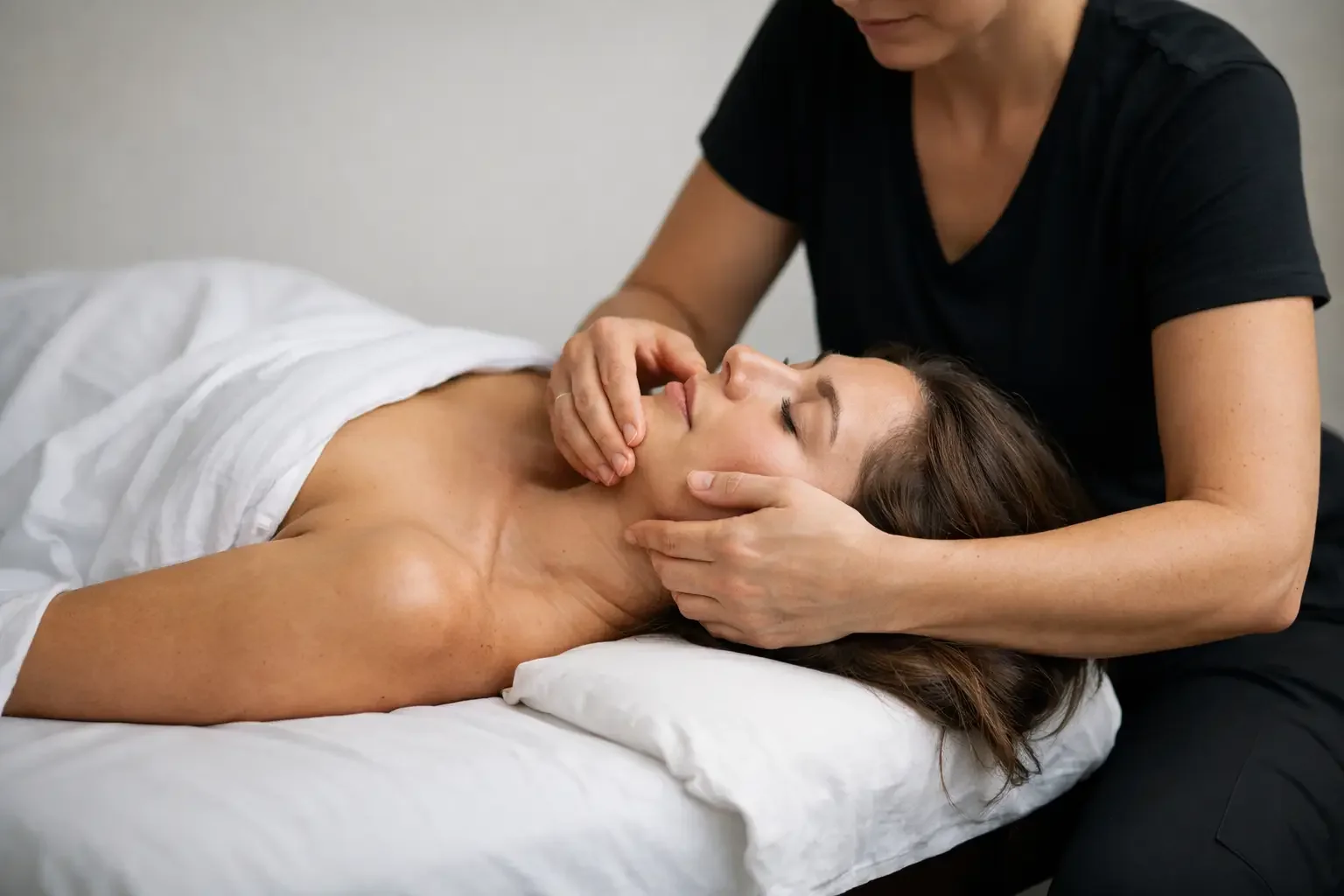
Your jaw may be doing more overtime than your inbox. The classic New York pattern is easy to spot: a laptop-forward workday, a rushed workout, a crowded subway ride, then dinner while answering one last Slack. By bedtime, the teeth are pressed together, the temples ache, and opening wide for a sandwich feels oddly ambitious. For people searching for TMJ massage in NYC, the real question is usually less glamorous: can anything make this jaw feel less like it's holding a grudge?
Sometimes, yes. Thoughtful massage can help reduce the muscular tension surrounding the jaw, face, neck, and shoulders. But it is not a catchall fix for every kind of jaw pain, and a good massage therapist will treat it as one part of a larger picture rather than a magic thumb-to-cheek solution.
Why New Yorkers Are Clenching So Much
Jaw tension has always had its regulars: people who grind or clench their teeth, chew gum constantly, live with a bite issue, or carry stress in their face. What has changed is the volume of forces asking the jaw to stay switched on.
Screens matter. The forward-head posture that comes with laptop work and phone scrolling can load the neck and upper shoulders, which often changes how the jaw is held. Remote work did not eliminate commuting strain so much as add a second shift of screen time. Plenty of people now move from a kitchen-counter laptop setup to a phone on the train to a show in bed, all while barely changing position.
Then there is the cultural layer. Founders rehearsing pitches, parents trying to get everyone out the door, creatives concentrating through deadlines, and anyone attempting to remain civil in Manhattan traffic may all have one involuntary habit in common: clenched teeth. Stress is not the only cause of jaw symptoms, but it can turn a manageable pattern into a loud one.
What TMJ Massage Can Actually Address
TMJ refers to the temporomandibular joint, the joint connecting your jaw to the skull. People often use "TMJ" to describe almost any jaw issue, though the joint itself is only one possible source of discomfort. Muscles that move the jaw, including the masseter and temporalis, can become tender and overworked. Neck and shoulder tension may be part of the same pattern.
A jaw-focused session can include careful work around the cheeks, temples, scalp, neck, and shoulders, along with assessment-informed attention to how those regions are interacting. The goal is not to aggressively force a tight jaw to release. It is to help reduce guarding, improve comfort, and give the surrounding tissues a better chance to move normally. (A gua sha face massage add-on can pair naturally with this work.)
For the right person, this may mean less soreness when chewing, fewer tension-style headaches, a less fatigued feeling in the face, or easier jaw movement. Results vary. If night grinding is the main driver, massage may feel helpful but cannot stop the unconscious habit on its own. If a dental issue or joint problem is involved, bodywork should not replace evaluation and treatment from the appropriate clinician.
The Jaw Is Rarely Just the Jaw
The jaw has excellent PR. It gets blamed for headaches, ear-area discomfort, facial pain, and neck tension because it is easy to notice. But a useful session does not treat the jaw as an isolated island.
A massage therapist may find that the upper trapezius, muscles at the base of the skull, or the sides of the neck are doing far too much. This does not prove that tight shoulders "caused" the jaw issue. Bodies are more complicated than a single culprit. It does mean that working only on the cheek can miss the larger holding pattern.
That broader approach matters for desk workers especially. If your head has spent eight hours reaching toward a second monitor, your jaw may be compensating in ways that make direct work feel temporary unless the neck and upper body get attention too.
What a Good Session Should Feel Like
A useful jaw-focused massage is specific, not theatrical. The massage therapist should ask about symptoms: when they happen, whether you clench or grind, if chewing triggers pain, whether you get headaches, and what has helped or worsened the situation. Mention dental work, an oral appliance, recent injury, jaw clicking, medications, and any diagnosis you have received.
During the massage, pressure around the face and jaw should be deliberate and tolerable, not a contest of endurance. More intensity is not automatically more effective. Muscles that are already guarding can respond badly to being bullied. You may notice referred sensation into the temples or teeth, which is worth communicating in real time so pressure can be adjusted.
Some people feel immediate relief and more ease in opening the mouth. Others mainly notice how much they had been clenching once the area is no longer numb to itself. Either response can be useful information. A session is also a chance to identify patterns: whether the jaw tightens after long calls, when lifting heavy at the gym, during travel, or at 3 a.m. when sleep is already not happening.
Intraoral Massage: An Option Worth Asking About
For stubborn jaw tension, some of our licensed massage therapists offer intraoral massage: gentle work on the jaw muscles from inside the mouth, gloved, brief, and only ever with your explicit consent. It sounds intense; in practice it is precise and, for the right person, remarkably relieving. New York State recognizes intraoral work as a standard treatment for the muscles involved in TMJ.
Because it takes specific training, not every massage therapist at every studio offers it. Rather than booking it directly, reach out to our team first, by phone, email, or text, and we'll pair you with someone who does.
When Massage Is Not the First Stop
Massage can be a sensible support for muscle-driven tension, but certain symptoms deserve dental or medical attention first. Seek prompt care for significant swelling, fever, a recent jaw injury, a jaw that locks open or closed, sudden changes in your bite, severe or escalating pain, numbness, or difficulty swallowing or breathing.
Persistent clicking is not always an emergency, and painless clicking alone may not require treatment. Still, clicking with pain, limited movement, or repeated locking is a good reason to speak with a dentist or healthcare professional. A dentist can assess teeth, bite factors, grinding, and whether an oral appliance may be appropriate. That is not a detour from bodywork. It is often the practical next move.
The same goes for headaches. Many headaches are not caused by jaw tension, even when jaw tension is present. New, severe, or unusual headaches should be evaluated rather than assigned to your masseter because it seems plausible.
Make the Work Last Past the Walk Home
The goal is not to become the person who spends every waking hour monitoring their jaw. That tends to create its own brand of tension. Instead, use a few low-effort check-ins during moments already built into the day: before a meeting begins, when you leave the gym, while waiting for the elevator, or when you plug in your phone at night.
Try this: let your lips come together lightly while keeping your teeth slightly apart. Let your tongue rest gently against the roof of your mouth, without pushing. Drop the shoulders. Breathe normally. If that position feels strangely unfamiliar, you have learned something useful.
Reducing all-day gum chewing can help some people. So can moving the laptop screen higher, taking calls with headphones instead of pinning a phone between shoulder and ear, and avoiding the habit of testing a sore jaw by repeatedly opening it as wide as possible. If you use a night guard or have been given specific instructions by a dentist, follow those rather than improvising.
For chronic clenching, consistency usually beats the occasional heroic intervention. A single massage can lower the volume. Regular care, paired with dental guidance when needed and a few realistic changes to the work setup, is more likely to shift the pattern over time.
Choosing TMJ Massage in NYC
When looking for TMJ massage in NYC, choose a setting where a licensed massage therapist can tailor the work to your symptoms and is comfortable saying when another provider should be involved. Ask whether the session can address the jaw alongside the neck, shoulders, and scalp. This is not an area where a generic relaxation script is especially useful.
Be clear about your goal. "My jaw hurts" is a start, but "I wake up with temple headaches and my right jaw feels tired after work calls" gives a massage therapist far more to work with. The best care feels collaborative: informed by your experience, responsive to your feedback, and realistic about what massage can and cannot change.
At PRESS, jaw tension can be approached as part of targeted, anatomy-based massage rather than a standalone facial problem. Licensed massage therapists work with the connected areas that often keep a clenched jaw in business: the neck, shoulders, scalp, and upper back. Find care in Williamsburg, Brooklyn; Greenpoint, Brooklyn; Union Square, Manhattan; Columbus Circle, Manhattan; and Long Island City, Queens. Book here when your jaw has made its point often enough.
Read also:
