
Massage for Cyclists in NYC: The Monday Problem
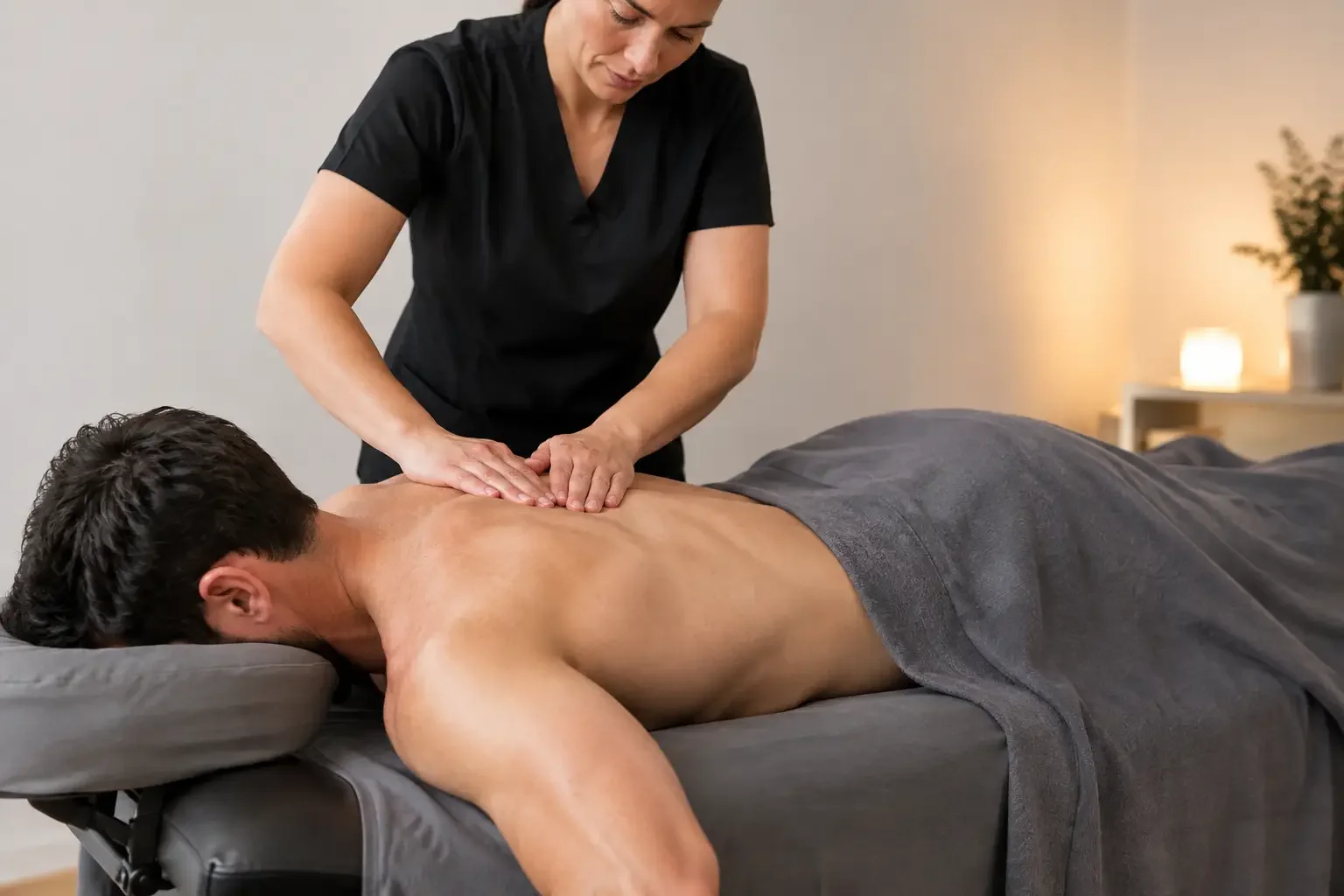
The real test of a New York ride is often not the ride. It is Monday morning, when you are back at a laptop, your hip flexors feel as if they have been shortened by a very determined tailor, and turning your head to check a cab in the bike lane suddenly seems ambitious. Massage for cyclists in NYC should address that full equation: training load, bike position, work posture, sleep, and the small physical negotiations required to live in a city.
Cycling is wonderfully efficient. That is partly the problem. You can log serious volume while moving through a remarkably narrow range of motion, then spend the rest of the day seated in nearly the same flexed position. The result is not necessarily an injury. More often, it is the accumulating background noise of tight calves, a grumpy lower back, stiff hips, sore hands, and a neck that has had enough of holding your head up against both wind and screens.
Why cyclists carry tension in such predictable places
A bike asks for repetition, not variety. Your glutes and quads produce power. Your calves stabilize and transmit it. Your hip flexors stay shortened. Your upper body works quietly but constantly to support your position on the bars. Add potholes, hard braking, heavy backpacks, and the tendency to hunch over a phone after the ride, and the usual cyclist complaints begin to make sense.
The neck, upper traps, and muscles around the shoulder blades often deserve attention even for riders who think of cycling as a leg sport. A road rider holding an aerodynamic position, a commuter scanning traffic, and a parent towing a child seat all spend considerable time bracing through the upper body. That tension can show up as shoulder stiffness, headaches, or the familiar inability to comfortably look over one shoulder.
Below the waist, the conversation is usually more complicated than "tight hamstrings." Hip discomfort can reflect training volume, fatigue, saddle position, limited hip mobility, or a workload that outpaced recovery. Calf and foot soreness may be related to climbing, cleat setup, shoes, or simply adding more miles too quickly. A skilled massage therapist can work with the tissues that feel overloaded, but massage is not a substitute for a sensible bike fit or an evaluation of persistent pain.
What targeted massage can actually do for a cyclist
The useful case for massage is not that it magically clears every byproduct of exercise or erases a hard weekend. Bodies are less cinematic than that. Massage can, however, help reduce the feeling of muscle soreness and stiffness, support short-term range of motion, and give a rider a clearer read on where they are holding unnecessary tension.
For cyclists, that often means targeted work through the calves, quads, glutes, hip area, and lower back, alongside the neck, shoulders, forearms, and hands. The session should reflect the rider in front of the massage therapist, not a generic athletic recipe. Someone training for a century has different needs from a person biking from Greenpoint, Brooklyn to Union Square, Manhattan four days a week and calling that their cardio.
The pressure question matters. More pressure is not automatically more productive. If your legs are extremely tender after a race, a hard training block, or your first long ride of the season, aggressive work may leave you feeling worse. A lighter, more circulation-focused approach may be the better call that day. Deeper, more specific work can make sense when there is a familiar, stubborn pattern and enough recovery time afterward.
A good massage therapist will ask about your rides, current soreness, injuries, upcoming events, and what changed recently. Mention the practical details: a new saddle, indoor trainer hours, a longer commute, a crash, numb hands, disrupted sleep, or an ambitious return after travel. These details are often more useful than the vague declaration that your "whole body is tight."
Timing matters more than riders think
If you have a major event tomorrow, this is generally not the time to request intense work on every major muscle group. You want to arrive at the start line familiar with your body, not surprised by a tender calf. Many riders prefer a lighter session before an event, while saving more focused work for several days after. (Runners deal with the same timing math.)
For routine training, a massage every few weeks can be useful as maintenance, especially during periods when cycling is stacked on top of long workdays, parenting, or poor sleep. But frequency depends on volume, budget, history of pain, and how your body responds. A person riding 30 miles a week for transportation may need a different rhythm than someone building toward a race.
There is also a strong argument for booking before you feel wrecked. The city has trained many of us to wait until a problem becomes inconvenient enough to demand a calendar slot. That logic works poorly for recurring tension. Consistent bodywork can make it easier to notice patterns early: the left hip that gets cranky after hills, the wrist that hurts only after long computer days, the jaw clenching that arrives whenever deadlines and headwinds overlap.
The bike fit conversation belongs in the room
Massage can make an uncomfortable position more tolerable for a while. It cannot make a poorly fitted bike ideal. If pain returns in precisely the same spot after every ride, or if you have persistent numbness, sharp pain, weakness, swelling, or pain that changes the way you pedal, it is time to look beyond soft-tissue work.
A bike fit may reveal a saddle-height issue, reach that is too long, cleats that need adjustment, or handlebars that keep loading your wrists and neck. A medical professional or physical therapist may be appropriate for ongoing symptoms, especially after a fall. This is not bad news. It is the efficient answer. Cycling is a machine-and-human system, and both sides occasionally need adjustment.
A better post-ride plan than collapsing on the couch
You do not need an elaborate recovery ritual involving five devices and a spreadsheet. After a demanding ride, eat enough, drink fluids, get some sleep, and take a few minutes to move out of the riding position. A short walk, gentle hip movement, and easy neck and shoulder mobility can be more realistic than promising yourself a 45-minute stretch session you will never do.
Then use massage strategically. If your calves feel ropey, your hips feel restricted, and you have been rotating between a bike saddle and an office chair all week, targeted bodywork can be a sensible part of the plan. If you feel generally tired but not especially sore, sleep and an easier training day may be the higher-value choice. Recovery is not a moral achievement. It is just logistics.
When a massage therapist should hear the full story
The most productive sessions are collaborative. Tell the massage therapist whether you are training for something, commuting daily, returning from time off, or trying to keep riding while managing a packed work calendar. Say if pressure tends to make you guard, if you bruise easily, or if you have a history of injuries.
Also be direct about your goal. Do you want more comfortable shoulder checks in traffic? Less lower-back stiffness after a trainer session? Legs that feel less heavy going into a lighter week? Specific goals help shape a more useful session, and they give you a way to judge whether the work is earning a place in your routine.
At PRESS
Cyclists can work targeted recovery into life between rides at our studios in Williamsburg, Brooklyn and Greenpoint, Brooklyn, both a few pedal strokes from the Brooklyn greenway, plus Union Square, Columbus Circle, and Long Island City, Queens. Book here when your bike, desk, and calendar have all decided to have the same opinion about your hips.
Read also:
