
Massage for Headaches in NYC: What Helps
The New York headache has a familiar arrival time: somewhere around the fourth hour of screen work, climbing up from the base of the skull or wrapping the temples like a too-tight hat. By evening it has colonized the whole head, and by Thursday it feels less like a symptom and more like a coworker. If you are searching for massage for headaches in NYC, you are usually asking a sharper question: is this coming from my neck, and can someone do something about it?
Often, yes, with honest limits worth stating upfront. Massage helps most with tension-type headaches, the kind driven by muscular patterns in the neck, shoulders, scalp, and jaw. It is not a cure for every headache, and some headaches need a doctor before they need a table. A good massage therapist is clear about which is which.
The Desk-to-Headache Pipeline
Most of the headaches massage can help with are built, not caught. The construction schedule looks like this: a head held forward of the shoulders for hours (the tech neck posture), which asks the muscles at the base of the skull to work overtime holding ten-plus pounds at a bad angle. Shoulders that drift upward during concentration and stay there. A jaw that clenches through meetings without asking permission. Shallow breathing, poor sleep, and a stress load that keeps the whole upper body slightly braced.
Those muscles, the suboccipitals, upper trapezius, levator scapulae, the jaw's masseter and temporalis, refer sensation into the head when they are chronically overworked. That is why the headache can feel like it lives behind your eyes or across your temples while the actual problem sits in your neck. The head is where the complaint arrives, not where it started.
This is also why the pattern is so common here specifically. The city's default posture is a phone six inches from the face on a moving train, followed by nine hours of laptop, followed by more phone. The muscles never get a shift change.
What a Headache-Focused Session Targets
Tell your massage therapist about the headaches specifically: where they start, when they arrive, what they feel like (pressure, band-like, one-sided, throbbing), and what your days look like. That map determines the work.
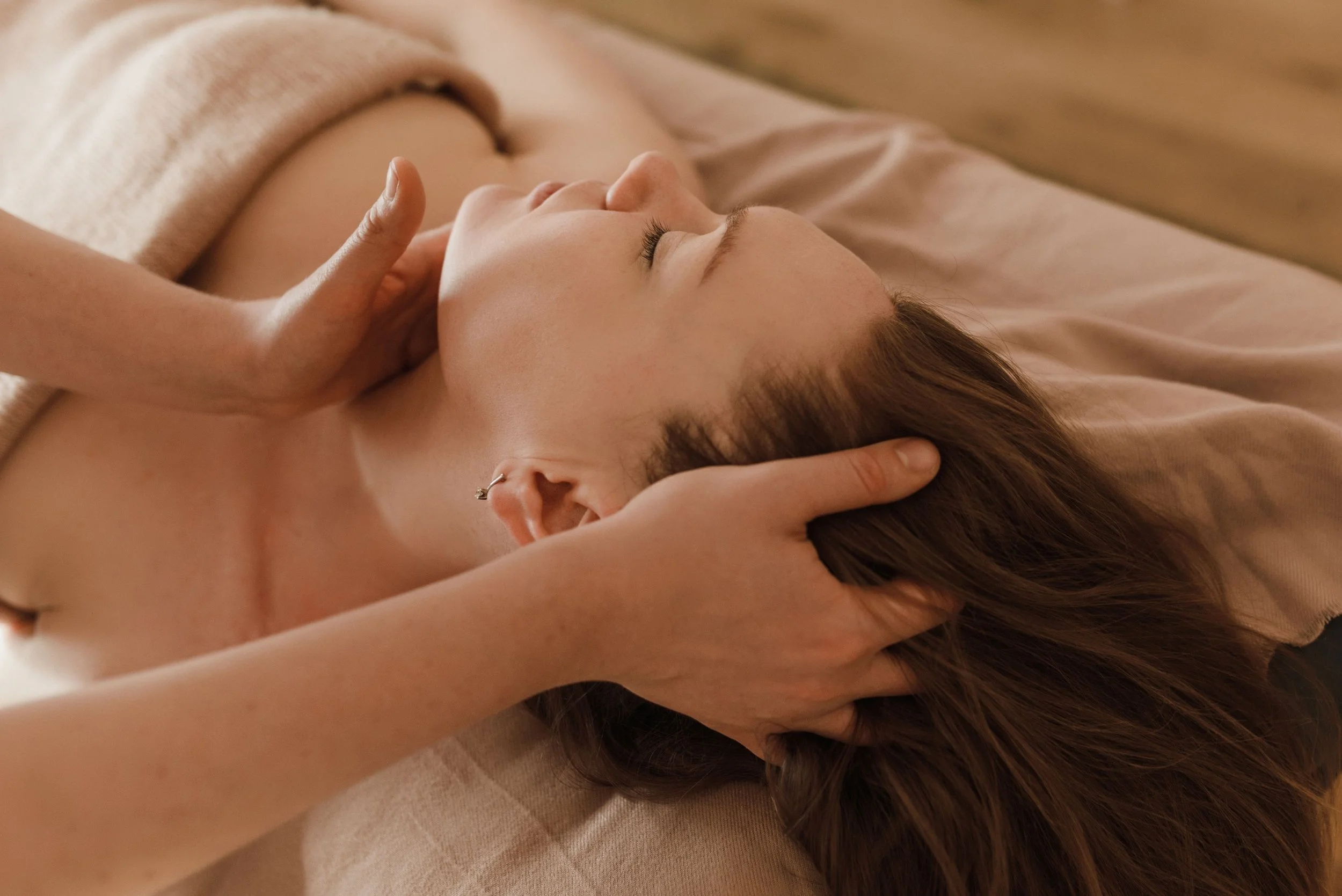
A session built for tension-type headaches typically concentrates on the neck, the base of the skull, the shoulders and upper back, the chest (which rounds forward and holds the whole pattern in place), and, when relevant and consented to, the scalp and jaw muscles. The work is specific rather than heavy: these are small, sensitive muscles near your head, and bullying them tends to backfire. Productive pressure here is deliberate and tolerable, the kind you can breathe through.
The research is reasonably encouraging for exactly this lane: studies suggest massage can reduce the frequency and intensity of tension-type headaches for many people, and it may help some people with migraine as a complementary tool, mainly by addressing the neck tension and stress that can act as triggers. It does not abort a migraine in progress or replace migraine treatment. Honest framing: massage is a strong option for muscle-driven headaches, a supporting player for everything else.
Many people notice the effect in the days after: the headache arrives later, softer, or not at all, and turning the head stops being an event. That is also the honest signal for whether a regular rhythm is worth it, if a session buys you a better week, a standing appointment buys you a better month.
When a Headache Needs a Doctor, Not a Massage
Some headaches are medical business, and this list is not fine print. Seek prompt medical care for: a sudden, severe "worst headache of my life," a headache with fever and stiff neck, one that follows a head injury, one accompanied by confusion, vision changes, weakness, numbness, or trouble speaking, a new headache pattern after age 50, or headaches that are steadily worsening or waking you from sleep.
And if your headaches are frequent, severe, or running your life, see a clinician regardless, there are real diagnoses and real treatments, and massage works better as part of a plan than as a substitute for one. A responsible massage therapist will say exactly that.
Between Sessions: Starve the Pattern
Massage addresses the muscles; your days decide how fast the tension rebuilds. The unglamorous levers: raise the screen so your head can sit over your shoulders, take actual breaks where your arms hang and your eyes focus on something farther than two feet away, check whether your jaw is clenched right now (it was, wasn't it), drink water before the afternoon, and treat sleep as headache medicine, because it is.
None of this requires becoming a posture person. It requires interrupting the exact sustained positions that feed the muscles that feed the headache.
Where to Start in Manhattan
For desk-driven headaches, the practical prescription is focused upper-body work on a schedule you will keep, which is what the Back, Neck & Shoulders session is built for. If your workday happens in Manhattan, our studios at Union Square and Columbus Circle sit close enough to the office districts that the appointment fits inside a real day, which matters, because the headache pattern certainly does.
At PRESS
PRESS offers anatomy-based massage from licensed massage therapists in Williamsburg, Brooklyn; Greenpoint, Brooklyn; Union Square, Manhattan; Columbus Circle, Manhattan; and Long Island City, Queens. Book here, tell us where the headaches start, and let someone finally address the neck that has been sending them.
Read also:
Written by Rachel Beider, LMT, founder of PRESS Modern Massage. Rachel is a New York State–licensed massage therapist and AMTA member with nearly two decades of experience in massage therapy and wellness.
