
Massage for Foot Pain in NYC: Start With the Calves
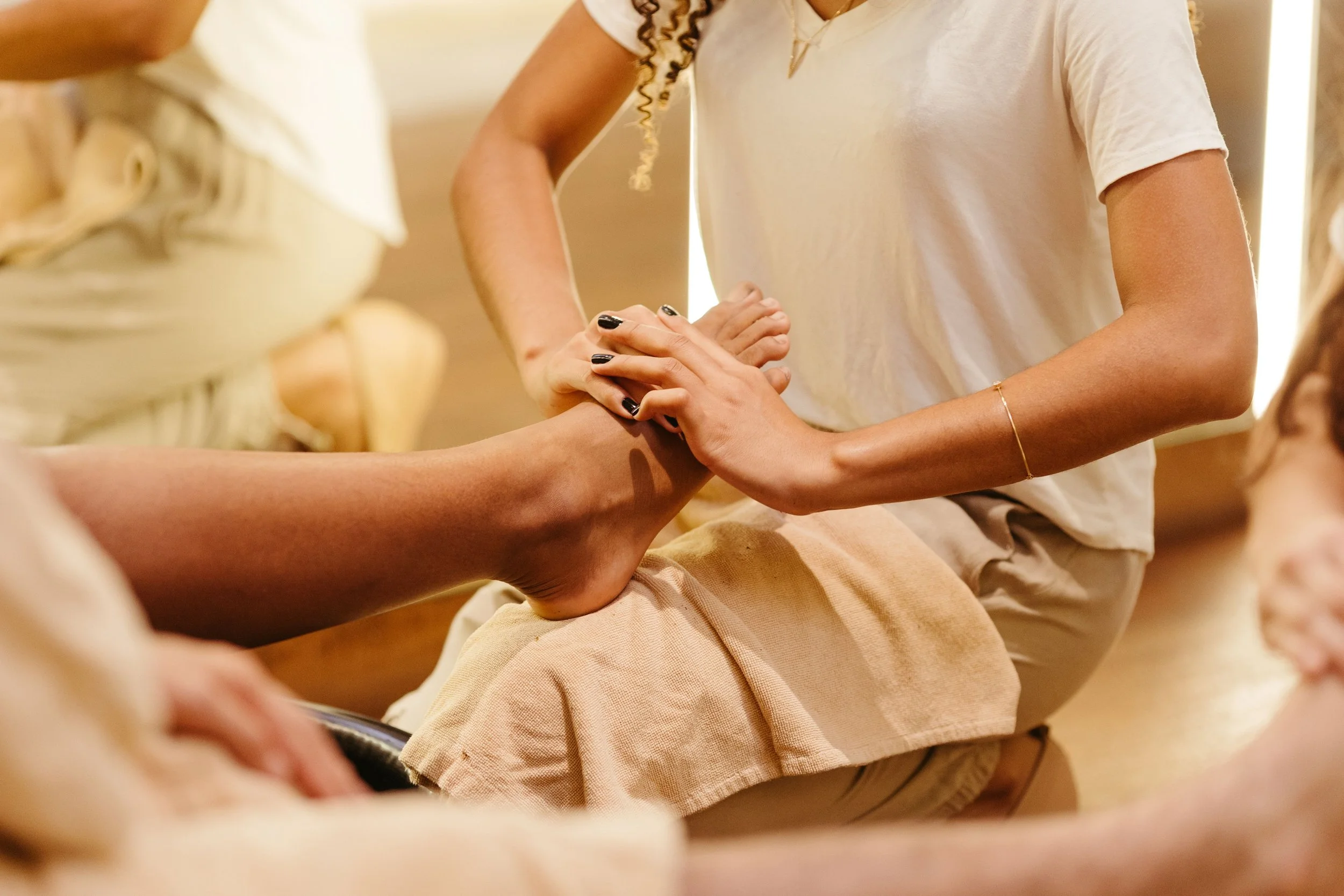
Your feet are doing more than your workout app gives them credit for. They absorb subway platforms, standing desks, stroller walks, rushed airport terminals, and that slightly absurd number of steps required to have dinner in Manhattan. By the time foot pain becomes a search for massage for foot pain in NYC, the problem is often not just located in the foot.
A sore arch can be connected to a tight calf. An aching heel may arrive alongside a cranky Achilles tendon. Tingling toes can be a reason to stop guessing and speak with a medical professional. The useful question is not whether massage is a miracle fix. It is whether thoughtful, anatomy-based bodywork can reduce the tension and load patterns contributing to the pain.
Why New Yorkers' feet get so loud
Foot pain has a way of sounding minor until it changes how you walk. Then it starts recruiting the rest of the body: you limp a little, your knee rotates differently, your hip gets annoyed, and suddenly the low back is sending emails marked urgent.
New York adds a few predictable ingredients. There is the commuter who walks a mile before 9 a.m. and calls it normal. There is the remote worker who spends eight hours barefoot on hard apartment floors, then heads to a high-intensity class. There are runners increasing mileage too quickly, parents carrying a child on one hip, and people wearing shoes selected for visual reasons that are, at best, adjacent to biomechanics.
The foot itself is a dense piece of engineering. It contains bones, joints, muscles, fascia, tendons, and nerves that have to coordinate with the ankle, calf, knee, and hip. When one area is repeatedly overloaded or restricted, the discomfort may show up elsewhere. This is why a massage therapist treating foot pain should not spend the entire session treating only the sole of the foot.
What massage for foot pain can address
Targeted massage can be especially useful when discomfort is related to muscular tightness, repetitive loading, post-workout soreness, or the compensations that come from a long week on your feet. A skilled massage therapist may work with the feet, but also the calves, lower legs, ankles, hamstrings, glutes, and hips, depending on what your movement patterns suggest.
For some people, the immediate goal is simple: make walking to the train less miserable. For others, it is restoring ankle mobility before a race, easing calf tension after a stretch of travel, or interrupting the foot-to-hip chain reaction caused by old, worn-out shoes.
There is a practical distinction worth making. Massage can help calm sensitive tissue and improve how an area feels and moves in the short term. It does not replace a diagnosis, change the structure of a bone, or solve every condition that produces heel or arch pain. Anyone promising otherwise has mistaken confidence for expertise.
Sore arches and tired soles
Arch discomfort often gets blamed on the foot alone. Sometimes the sole is indeed overworked, particularly after long days standing, a spike in running, or time in shoes with little support. But tight calves can limit ankle movement and shift more demand into the foot with every step.
A massage therapist may use measured work through the plantar surface of the foot and surrounding lower-leg muscles, then assess how the ankle and calf respond. The sensation should be productive, not an endurance contest. More pressure is not automatically better, especially in an already irritated area.
Heel pain that shows up in the morning
Heel pain that is sharp with the first few steps of the day is common enough that it has become a familiar office conversation. It can be associated with plantar fascia irritation, though only a qualified clinician can diagnose the cause. Massage may help address calf and foot tension that can accompany this pattern, but it is usually most useful as one piece of a larger plan.
That plan might include activity adjustments, more supportive footwear, gradual strengthening, and guidance from a podiatrist or physical therapist when symptoms persist. This is less glamorous than buying a single fix. It is also how bodies tend to work.
Calf tightness after running, cycling, or travel
The lower leg is frequently the missing chapter in a foot-pain story. Calves work hard when you run, walk uphill, wear heeled shoes, pedal, or spend hours seated with your ankles held still on a flight. Restricted calf muscles can make the foot work overtime.
For active people, massage can support recovery by addressing accumulated tension without pretending to erase training load. If a long run triggered pain, the answer may be a combination of bodywork, a temporary mileage adjustment, and a more realistic recovery schedule. Your 6 a.m. run club will survive without you for a week.
The treatment should not be a foot-only performance
A good session begins with a conversation. When did the pain start? Is it sharp, dull, burning, or numb? Is it worse first thing in the morning, after exercise, or after sitting? Has your training, commute, footwear, or work setup changed recently?
Those details help a massage therapist decide whether massage is appropriate and where to focus. Treatment may include work on the feet and calves, but the hips and glutes matter too. The body is not organized like a city tax bill, with each department operating in glorious isolation.
Communication during the session matters. Say something if pressure causes sharp pain, numbness, tingling, or a protective bracing response. A massage therapist can adjust depth, pace, and technique. The goal is not to win points for tolerating discomfort. It is to leave with tissue that feels less guarded and movement that feels more available.
When massage is not the first stop
Foot pain deserves a clinical evaluation when it is severe, follows a fall or injury, creates an inability to bear weight, or comes with major swelling, redness, warmth, numbness, weakness, fever, or an open wound. Persistent pain that is not improving also warrants a podiatrist, physician, or physical therapist.
This is particularly true if you have diabetes, circulatory issues, a history of stress fractures, or unexplained nerve symptoms. Massage can be a smart part of care, but it should not become a way to postpone the information you actually need.
Make the relief last past the walk home
The least exciting advice is often the most useful: pay attention to what changes the load on your feet. That can mean rotating shoes before they are visibly falling apart, increasing workout volume gradually, taking short movement breaks during screen-heavy workdays, or avoiding the urge to make every recovery day a 15,000-step errand marathon.
After a massage, notice the practical signals. Does your ankle bend more comfortably? Does your stride feel less guarded? Are you less likely to shift weight to the outside edge of one foot? Those are better measures than chasing a dramatic feeling in the treatment room.
Consistency can matter when tight calves, training demands, or work habits keep recreating the same problem. Regular massage is not a substitute for strength, rest, appropriate shoes, or medical care when needed. It can, however, be a useful maintenance tool for people whose feet carry the full administrative burden of city life.
At PRESS
A full body massage at PRESS can include focused work for foot pain alongside the calves, legs, hips, and other areas affecting how you move. Find a massage therapist in Williamsburg, Brooklyn; Greenpoint, Brooklyn; Union Square, Manhattan; Columbus Circle, Manhattan; or Long Island City, Queens, and book when your feet are ready for a more intelligent plan.
Read also:
Written by Rachel Beider, LMT, founder of PRESS Modern Massage. Rachel is a New York State–licensed massage therapist and AMTA member with nearly two decades of experience in massage therapy and wellness.
