
Massage for Heartbreak: What to Do When a Breakup Hurts Everywhere
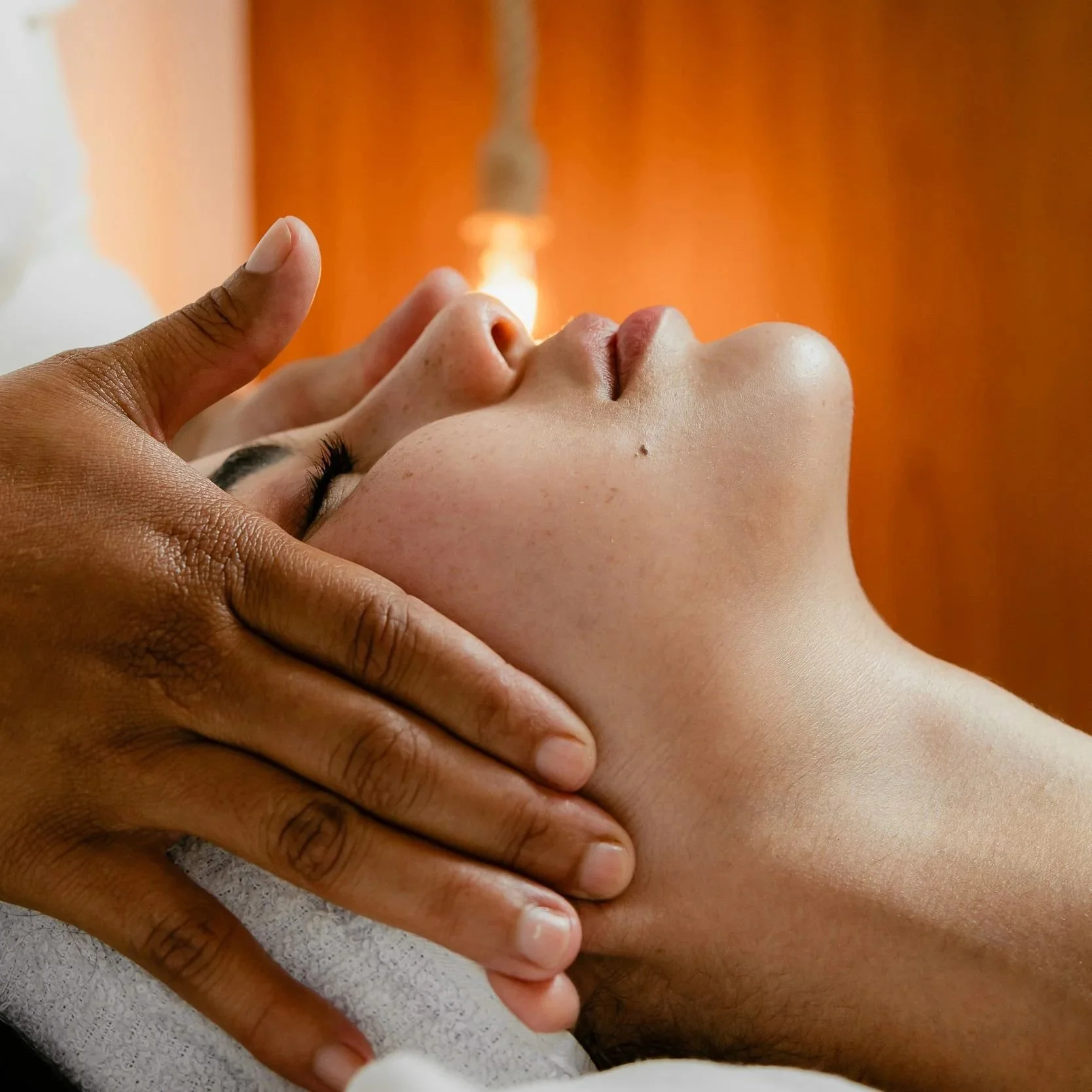
There are few cities better suited to falling in love than New York.
There are also few cities more logistically hostile to breaking up.
Your ex lives three subway stops away. Their office is near yours. Their friends are somehow at the same bar in Greenpoint. Their face appears on Hinge forty-eight hours after they said they "needed to work on themselves." The restaurant where you had your third date remains inconveniently excellent.
And meanwhile, your neck hurts.
Heartbreak has a way of becoming physical.
You may notice a tight chest, clenched stomach, headaches, jaw tension, restless sleep or the feeling that your entire upper body has contracted by three inches. Your brain keeps replaying conversations while your shoulders quietly migrate toward your ears.
This is where massage after a breakup can be useful.
Not because somebody can knead your ex out of your fascia.
Because heartbreak is exhausting, and sometimes the body needs care before the mind is ready to make sense of anything.
Why does heartbreak feel so physical?
The idea that rejection "hurts" is more than poetic, although the neuroscience is more complicated than the Instagram version.
A well-known 2011 brain-imaging study of people who had recently experienced unwanted breakups found that intense social rejection and physical pain produced some overlapping patterns of brain activity. Later research showed that the neural representations are not identical, so it would be an exaggeration to say your brain literally processes a breakup exactly like a broken bone.
Still: emotional pain can feel remarkably bodily.
Psychologist Guy Winch, whose How to Fix a Broken Heart focuses specifically on romantic heartbreak, argues that breakups are often underestimated precisely because there is no visible injury. His book examines how heartbreak can interfere with concentration, behavior and everyday functioning. Conveniently for this article, Winch also has a New York City clinical background- which feels appropriate for anyone who has ever cried discreetly behind sunglasses on the M14.
Your body may be bracing before you've noticed it
One of the most useful ideas associated with Bessel van der Kolk's The Body Keeps the Score is paying attention to physical experience rather than treating the mind and body as entirely separate systems. The book concerns trauma, and an ordinary breakup should not automatically be medicalized as trauma. But the basic practice of noticing your internal state can be valuable during periods of intense stress.
Try it now.
Where do you feel the breakup?
Your throat?
Your sternum?
Your stomach?
The space between your shoulder blades?
Your jaw?
Your hands?
Some people notice pressure or aching. Others feel agitated and restless. Others feel almost numb.
Don't worry about decoding it. You aren't required to discover that your left shoulder represents your fear of abandonment.
The useful part is noticing where you're bracing.
What a heartbreak massage might look like
The ideal massage after a breakup may be different from the massage you'd choose after running a half-marathon. (And if this would be your first time on a table, here's what to expect.)
This is a good time for slower, grounding work: long strokes down the back and arms, gentle neck and shoulder work, attention around the hands and scalp, and unhurried pressure that gives your nervous system fewer things to react to.
Heart-opening strokes can also make sense.
Again, this doesn't need to be woo-woo. Emotional stress often brings the shoulders forward and makes breathing shallower. Gentle work around the front of the shoulders and upper chest- when within the massage therapist's scope and explicitly consented to- can help counter that curled-in posture. Soft strokes along the arms and across the shoulders can feel reassuring without becoming overly intense.
The goal is not "emotional release."
The goal is to make enough physical space that you can take a complete breath.
Breathe like nobody is texting you
Heartbreak produces a very specific modern posture: phone six inches from face, shoulders rounded, refreshing a message thread that contains no new information.
Put the phone down.
During massage, notice your inhale.
Let it travel lower into the ribs and abdomen. On the exhale, see whether your shoulders can become slightly heavier against the table.
Then do it again.
There is no need to force enormous breaths. Deep breathing should feel comfortable, not like another wellness challenge you are failing.
The interesting thing is often noticing how frequently the breath catches when the mind returns to the breakup.
You remember the last conversation: breath stops.
You picture them with someone else: stomach tightens.
You compose the text you're definitely not going to send: jaw clenches.
The body is an excellent snitch.
The NYC problem: your ex is still geographically available
One of the hardest things about a New York breakup is proximity.
In a smaller social ecosystem you might be able to avoid someone. Here, you can end a relationship in Cobble Hill and encounter the person buying radicchio at Union Market the following Thursday.
So post-breakup care sometimes requires redesigning the city for a while.
Take a different train. Change the coffee shop. Stop walking past their building "because it's technically the fastest route." Pick a new Saturday neighborhood. If every table in the West Village contains a memory, go to Jackson Heights for momo or spend an afternoon walking around Red Hook.
You are not surrendering territory.
You are giving your brain some new material.
Eventually, the city stops feeling like an archive of the relationship and becomes yours again.
What else helps after a breakup?
Start with the boring biological infrastructure because heartbreak is remarkably good at destroying it.
Eat regular meals. Sleep at actual nighttime. Go outside before the sun disappears between buildings. Move enough to discharge some agitation- walk the West Side Highway, circle Prospect Park, take a class, lift something heavy, wander through the Met until your phone battery dies.
See people who know you independently of the relationship.
And consider making your phone considerably less interesting.
Mute your ex. Archive the text thread. Remove the Instagram shortcut if you keep opening it by muscle memory. There is very little useful information available on the 47th viewing of someone's Stories.
Winch's argument in How to Fix a Broken Heart is particularly useful here: heartbreak has mental habits that can perpetuate it, including idealizing the lost relationship and repeatedly returning to reminders.
This does not mean pretending you don't care.
It means noticing when grieving turns into surveillance.
Change the apartment, too
In New York, a breakup often leaves one person living inside the physical evidence.
Their side of a tiny closet.
Their coffee mug.
The absurdly large plant you bought together despite having approximately eleven square feet of natural light.
Move things.
You don't need to throw everything away in a cinematic purge. But rearranging furniture, changing the bedding, moving photographs and reclaiming a corner of the apartment can interrupt the sensation that you're living on the set of a relationship that has been cancelled.
Buy one thing that your ex would have hated.
Nothing ruinously expensive. A lamp will do.
Where massage fits
Massage is not psychotherapy, and current research does not justify claiming that it treats heartbreak. Research on massage for anxiety and emotional symptoms is mixed, although massage may help some people with relaxation and muscular tension.
That modest role is enough.
After a breakup, there can be enormous pressure to figure it out: What happened? Was it avoidable? What did that final text actually mean? Are you growing? Have you learned the lesson?
For an hour, perhaps you don't need a lesson.
You can notice the muscles along your back. Feel your breathing slow down. Let someone work on the shoulders you've been tightening every time your phone lights up.
Heartbreak tends to pull attention toward a person who is no longer there.
A good massage brings some of that attention back to the person who is.
You.
Even in New York, that person is worth making room for.
A note on physical symptoms: Emotional stress can feel physical, but new, severe or persistent chest pain, difficulty breathing or other concerning symptoms should not be assumed to be "just heartbreak." Seek appropriate medical evaluation.
At PRESS
When you're ready for that hour, our licensed massage therapists offer slow, grounding full body sessions at our studios in Williamsburg, Greenpoint, Union Square, Columbus Circle, and Long Island City, Queens. Book here. Tell them as much or as little as you want. The table doesn't need the whole story.
Read also: