
Wellness Studio in Brooklyn: What to Look For
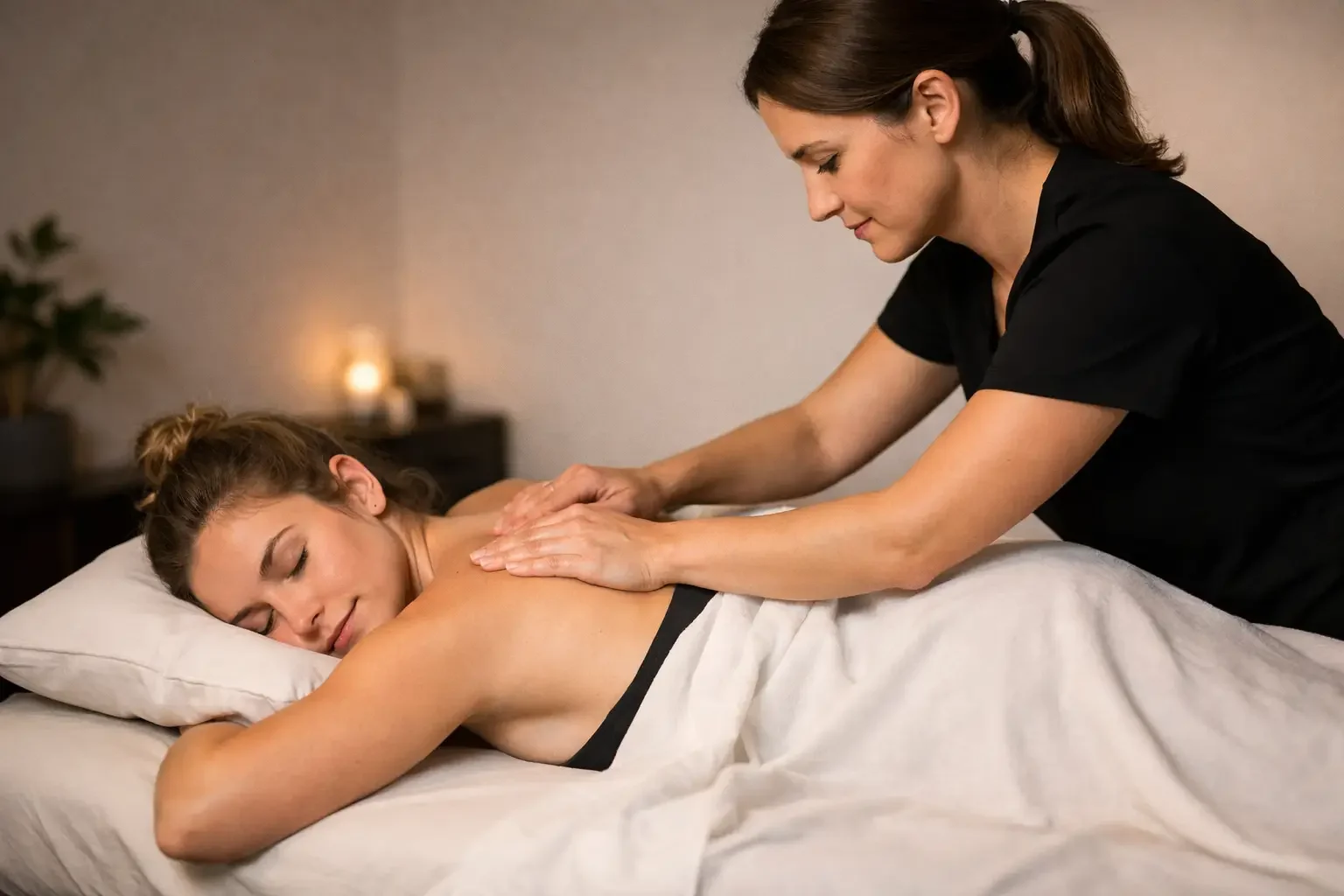
Brooklyn has become very good at selling a feeling. There is a candle for nervous-system regulation, a cold plunge for your personal brand, and a matcha counter near practically every reformer Pilates studio. But when your neck has been clenched since Monday, your hip is objecting to the L train, or your training plan has caught up with your calves, the question is less atmospheric: what will actually help?
A wellness studio in Brooklyn worth returning to should make a clear case for itself. Not with vague promises of escape, but with skilled, targeted care that reflects how people really live here: hunched over laptops in Williamsburg, Brooklyn; carrying kids and groceries through Greenpoint, Brooklyn; training before work; answering Slack messages until their jaw feels involved.
Massage is not a substitute for medical care when something is serious, sudden, or persistent. It is, however, a useful part of maintaining a body that has to do a lot. The difference lies in whether the session is designed around your actual patterns of tension, movement, stress, and recovery, rather than a generic idea of relaxation.
What a wellness studio in Brooklyn should solve
The modern workday has made physical discomfort oddly normal. A person can spend nine hours toggling between video calls and spreadsheets, squeeze in a hard workout, then wonder why their shoulders feel like they are trying to become earrings. Remote work removed some commutes, but it also made many apartments double as offices, gyms, and places where nobody has a chair adjusted correctly.
That is why the useful question before booking massage is not, "What sounds nice?" It is, "What is my body doing repeatedly that it cannot quite recover from?"
For one person, that may mean upper-back tension, headaches, and a jaw that is working overtime. For another, it is low-back stiffness after deadlifts, or legs that never quite bounce back from running on concrete. Parents may be dealing with the physical math of lifting, feeding, carrying, and sleeping in small increments. None of these problems needs a mystical explanation. They need attention, context, and a massage therapist who can adapt the work to the person on the table.
A strong session begins with a conversation. Where is the discomfort? When does it show up? What has changed recently: a new training block, travel, a deadline, a baby, a different desk setup? The answers help a massage therapist decide where to spend time and what kind of pressure and pacing make sense.
Targeted work beats a menu of vibes
There is a place for a quiet hour with low lights. But the broad "relaxation or deep tissue?" choice can be a little unhelpful, especially for people who are not sure what they need. Pressure is not the same as precision. More intense does not automatically mean more effective, and leaving sore for three days is not a medal.
A targeted massage can include focused work for the back, neck, and shoulders when screen posture is the main offender, while still addressing the hips, arms, or chest that feed into the same pattern. It can support recovery after demanding exercise without turning every tight muscle into a project. It can also be full-body care for someone whose stress is showing up everywhere, which is often the less dramatic and more accurate answer.
The best result is not necessarily a sudden feeling of being "fixed." Bodies are not software updates. More often, the immediate gain is easier movement, less guarding, a calmer baseline, or a clearer sense of what needs attention between appointments. Over time, regular massage may help people notice tension before it becomes their personality.
That regularity matters. Many New Yorkers wait until discomfort becomes disruptive, then attempt to solve six months of laptop posture in one appointment. A monthly or otherwise consistent routine is often more practical than emergency-only care, particularly for recurring desk tension, training load, and stress-related tightness. It also gives the massage therapist a better sense of your usual patterns and what has changed. (If monthly is your rhythm, that is what the PRESS membership is built around.)
The case for anatomy-based massage
"Anatomy-based" can sound like marketing copy until you consider the alternative: a standardized sequence delivered regardless of why you came in. Skilled massage therapists work with the practical relationships between areas of the body. Shoulder discomfort may involve the upper back, chest, neck, and how you use your arms all day. A tight lower back may not benefit from having the same spot aggressively worked for an hour.
That does not mean every ache has one hidden cause. Pain is complicated, and massage should not be sold as a diagnosis. But a massage therapist can listen to how symptoms behave, observe basic movement, and shape the session around the areas most likely to be contributing. For the client, this feels less like selecting a spa treatment and more like getting thoughtful, hands-on care.
It also makes communication more useful. You do not need to know anatomical terms or arrive with a perfect explanation. "My right shoulder gets angry after long meetings" is useful information. So is "my headaches start at the end of the day" or "my glutes feel tight after I run." A good massage therapist can ask better follow-up questions. You should also be able to say when pressure is too much, an area feels tender, or you would rather skip a body part entirely. Specificity is a feature, not a mood killer.
Pregnancy and postnatal care need their own logic
Pregnancy changes how a body carries weight, sleeps, moves, and recovers. Pregnancy massage in NYC should account for those changes without making extravagant claims about what massage can accomplish. Comfort, muscular tension, swelling, and the everyday strain of a changing body are all reasonable reasons to seek care.
Prenatal massage can be appropriate throughout all trimesters when a client has been cleared for massage and the session is tailored accordingly. Positioning matters: side-lying or supported prone positioning is used, with prone requested at booking. The point is not to treat pregnancy as fragile or to turn it into a medical event at every appointment. It is to make room for the realities of pregnancy with appropriate support and a massage therapist trained to work within that context.
After birth, postnatal massage can address the very ordinary physical demands of recovery and new parenthood: feeding positions, interrupted sleep, carrying a baby, and the strange upper-body tension that comes from looking down all day. If someone had unused prenatal credits, transferring them to postnatal care is a sensible continuity, not a bureaucratic obstacle.
How to choose the right kind of care
A wellness studio is worth your time when it treats your goals as more than a box on an intake form. Look for licensed massage therapists with substantial training, clear descriptions of what a session can address, and enough flexibility to adjust the plan when your body has other ideas that day.
Convenience matters, too, but not in the empty "make wellness easy" sense. If getting there requires a cross-borough expedition after a brutal workday, consistency gets harder. A neighborhood location can turn massage from an occasional rescue operation into part of the maintenance schedule, alongside movement, sleep, and the ergonomic changes you keep meaning to make.
There is also a useful trade-off to consider. A deeply relaxing session may be exactly what you need after an exhausting week. But if you are booking because of recurring headaches, a stiff neck, limited mobility, or workout-related soreness, say so upfront. The goal can be both calming and functional. Those are not opposing categories, despite what many spa menus imply.
The Brooklyn standard is getting smarter
New York's wellness culture is maturing, at least in pockets. People are less interested in being dazzled by a treatment name and more interested in whether they can sleep better, turn their head without wincing, sit through a presentation comfortably, or train again without feeling wrecked. That is a healthier standard. It asks wellness businesses to be useful, not merely photogenic.
At PRESS, the focus is therapeutic, anatomy-based massage from licensed massage therapists who tailor sessions to real bodies and real schedules. Our Brooklyn studios in Williamsburg and Greenpoint make ongoing care workable, and if your week lives elsewhere, you will find us in Union Square, Columbus Circle, and Long Island City, Queens too. Book when the first signs show up, not only when your body has drafted a formal complaint.
Read also:
