
The day after the marathon, the city is full of people walking down subway stairs backward. Most of that is ordinary soreness, and it fades. But for some runners, and plenty of people who just walk a lot of New York, the ache settles somewhere more specific: along the shin, or around an ankle that rolled on a curb three weeks ago and never quite felt right.
Here's how massage for shin splints and ankle sprains fits in, and where it doesn't.
Key takeaways
Shin splints usually mean overloaded muscles along the shinbone, often after a jump in running or walking.
Massage can ease tight calves and lower leg muscles, but it works around the sore spot, not on the bone.
Pain in one small spot on the bone, or pain at rest, needs a doctor first to rule out a stress fracture.
Wait on massage for a fresh ankle sprain until it's been checked and the swelling has settled.
Shin splints: what's going on
"Shin splints" usually describes pain along the inside edge of the shinbone that comes on with running or jumping. It's common when people increase mileage quickly, switch to harder surfaces, or change shoes. In New York, that's most of fall training season.
The muscles of the calf and lower leg work hard to absorb each step. When they're overloaded, they get tight and tender, and the area where they attach along the shin can get irritated.
What massage can help with
Massage can work on the calves and the muscles around the shin, which often feel tight and tender with this kind of overload. Many runners find that eases the ache and makes easy runs feel less grim. A good massage therapist works the muscle around the sore area, not directly on the bone, and keeps pressure in a range that feels productive rather than sharp.
What massage can't do is make up for training load. If shin pain keeps coming back, the bigger fix is usually in the plan: mileage, surfaces, shoes, strength work.
When shin pain needs a doctor
See a doctor before booking if the pain is in one small spot on the bone, hurts even when you're resting, or gets worse as you keep running. Those can be signs of a stress fracture, which needs medical care and rest, not massage.
Ankle sprains: timing is everything
New York sidewalks are basically an ankle obstacle course. A rolled ankle is one of the most common injuries there is.
Right after a sprain, the ankle is swollen and tender, and that's not the time for massage on the area. Get it checked first, especially if you couldn't put weight on it or the swelling was significant, to rule out a fracture.
Once a doctor or PT has cleared you and the acute swelling is gone, massage can help with what's left: tight calves from limping, a stiff foot, and the general tension that comes from walking strangely for a couple of weeks. The ankle itself will need the balance and strengthening exercises your PT gives you. Massage supports that work. It doesn't replace it.
What a session looks like
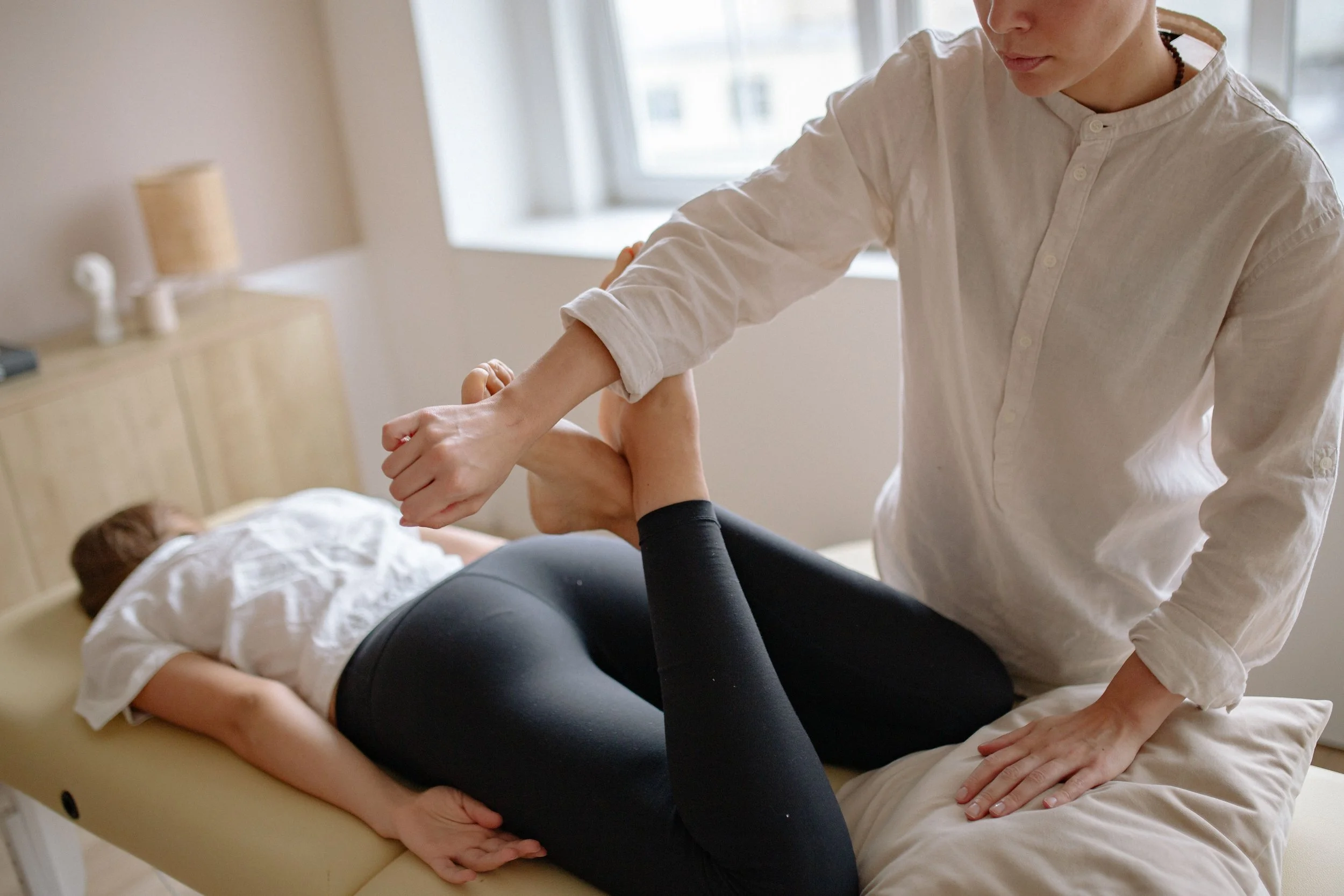
Expect your massage therapist to ask about your training, when the pain started, and whether you've seen anyone for it. The work usually focuses on calves, shins, feet, and often the hips and thighs too, since the whole leg works as a chain.
If you're mid-training, timing helps. Many runners book massage a day or two after a long run rather than the day before a key workout. We wrote more about when to get recovery massage as a runner.
Between sessions
Increase mileage gradually. The old rule of about 10 percent a week exists for a reason.
Mix in softer surfaces when you can, like park paths instead of sidewalk.
Check your shoes. Running shoes wear out faster than people think.
Do the calf and ankle strengthening your PT or coach gives you.
How long do shin splints take to get better?
Usually not as long as it feels. According to Patient.info's shin splints guide, shin splints usually improve within two to four weeks of stopping the activity that caused them. Getting back to your previous mileage can take longer, especially if you build back gradually, which is the smart way to do it.
Ankle sprains vary more. A mild sprain may feel better in a couple of weeks, while a worse one can take much longer. Your doctor or PT can give you a realistic timeline for yours.
Where to book
Runners come to PRESS from all over the city's running routes. The Long Island City, Queens studio is close to the waterfront paths, and Williamsburg and Greenpoint in Brooklyn are a short trip from McCarren Park and the East River. In Manhattan, Columbus Circle is right by Central Park. Mention your shins or ankle when you book.
FAQ
Can I get a massage on a sprained ankle?
Not on a fresh sprain. Get it checked first. Once you're cleared and the swelling has settled, massage can help with the surrounding tightness.
Will massage get rid of shin splints?
No. It can ease the muscle tension that comes with them. Lasting improvement usually comes from changing your training load and building strength.
Should I get a sports massage or a regular massage?
Either can work. Here's how to think about deep tissue vs sports massage.
Is deep tissue massage good for shin splints?
Firm work on tight calves can feel good, but deep pressure right on the sore shin usually doesn't help and can make it worse. Your massage therapist will adjust as you go.
Should a massage therapist work directly on my shinbone?
No. The work stays on the muscles around the shin, like the calves and the muscles along the front and inside of the lower leg.
Can I keep running with shin splints?
That depends on how bad it is, so check with a doctor or PT. Many runners cut back or cross-train for a few weeks, then build back slowly.
Does foam rolling help shin splints?
Gentle rolling on the calves can feel good between sessions. Avoid rolling hard directly over the sore part of the shin.
Read also:
Rachel Beider is the Founder and CEO of PRESS Modern Massage, an independently owned group of massage studios in New York City specializing in personalized, anatomy-informed therapeutic bodywork. A New York State Licensed Massage Therapist and the author of Press Here! Massage for Beginners, Beider founded the company in 2008 with a focus on combining clinical expertise with a modern, client-centered experience. Her work and insights have been featured by publications including The Wall Street Journal, Forbes, Entrepreneur, and Refinery29.